Repair guides
Pick a type, an appliance or a brand. Every guide lists the tools, the safety call-outs, the steps and the reading you should expect.
Diagnostic · 374
Symptom → most likely cause, step by step
Component tests · 69
How to test a specific part, with expected readings
Installation · 33
Install, replace and hook up appliances correctly
Fundamentals · 24
Core skills every appliance tech uses
Appliance
Brand-specific guides
42 guides · Washers
Diagnostic · 31
 Guide · Washer
Bleach or fabric softener not dispensing (or dispensing too early)
Softener and bleach cups use siphons. Overfilling, a clogged siphon or low water flow causes trouble.
 Guide · Washer
Classic Whirlpool/Kenmore direct-drive: agitates but won't spin
Check the lid switch first, then watch the clutch drum in spin to split the problem between the coupler/gearcase and the clutch/drive block.
 Guide · Washer
Clean-washer reminders and clean-cycle codes (CL, rL, F0E7)
These are reminders or load-detected messages, not faults. Run the clean cycle with an empty drum.
Guide · WasherClothes come out with lint or residue
Common causes are overloading, mixing lint-shedding and lint-catching fabrics, too much or wrong detergent, and a clogged pump filter.
Guide · WasherDetergent dispenser not emptying
Usually low water flow, clogged siphon caps or jets, or overfilling. Check flow first, then clean the drawer and its housing.
Guide · WasherDoor or lid won't lock / won't unlock
Clear obstructions and check the strike first. Then decide electrical vs mechanical: no click = lock solenoid/motor, wiring or control; click but no latch = mechanical jam or broken strike.
Guide · WasherFrigidaire front-load: reading codes and running diagnostic tests
Codes can be read by holding two buttons; the full diagnostic mode is stepped with the program knob.
Guide · WasherFront-load roaring or grinding in spin (bearings, rotor, spider)
Rising roar with speed usually means failed rear tub bearings, often after the seal leaks. Rule out a loose rotor or foreign object first, because a bearing job is a major repair that may cost more than the washer is worth.
Guide · WasherFront-load washer smells (mold/mildew at the gasket)
Odor comes from residue and standing moisture in the boot, dispenser and pump filter. Fix habits (HE dose, door open, prompt unloading) and run a monthly clean cycle.
 Guide · Washer
Haier portable washer will not fill or drain
Portable washers depend on the kitchen faucet and sink. Check the adapter, aerator, hose routing and pump filter before replacing parts.
Guide · WasherHot and cold water reversed (HC, F0E4, 4C2)
The hoses are swapped at the faucet or at the washer. Swap them; no parts needed.
Guide · WasherLG LE code: testing the hall sensor and stator
LE means the board drove the motor but did not see rotation. Check the harness, then test the hall sensor (about 10 kΩ per channel and a pulsing signal), then the stator windings, before condemning the board.
Guide · WasherLoud banging, roaring or shaking (bearings / suspension)
Separate the sound: a roar that grows with speed points to the tub bearing; banging and walking point to suspension (rods, shocks, springs) or a broken spider arm; rattle only during drain points to the pump.
 Guide · Washer
Reading stored codes and service/test mode (overview)
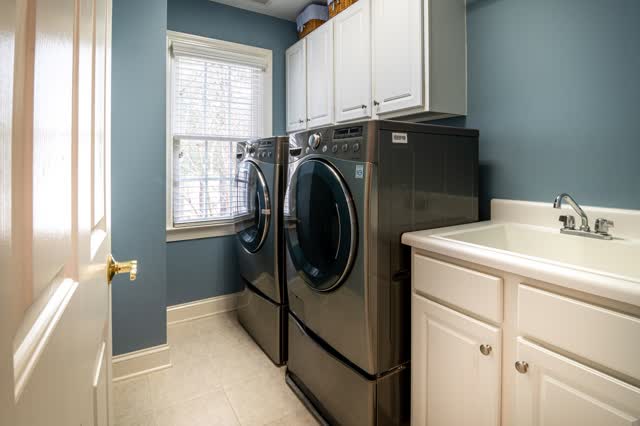
Entry sequences differ by model and generation. Always confirm on the tech sheet inside the cabinet; the sequences below are examples reported for specific model families.
Guide · WasherRepeated unbalanced-load codes
Occasional unbalance is a loading issue. Unbalance on small, balanced loads points to leveling, shipping bolts, floor, or worn suspension.
Guide · WasherSamsung top-load banging / unbalance (suspension rods)
Worn suspension rods let the tub hit the cabinet. After ruling out load and leveling, replace all four rods as a model-matched set.
Guide · WasherTop-load not agitating (fills and drains OK)
On older Whirlpool/Kenmore direct-drive top-loads, fill-and-drain-OK but no agitate/spin is the classic broken motor coupler. On newer models, look at the shift actuator/clutch, lid lock and motor.
Guide · WasherWash water not warm enough
Most washers rely on the home water heater; long pipe runs and eco settings reduce temperature. Check supply, hoses, valve and sensor.
Guide · WasherWasher controls do not respond (lock, download, power failure)
Many no-response calls are control lock, child lock, software download or power failure messages.
Guide · WasherWasher fills then drains at the same time (siphoning)
Usually the drain hose is pushed too far into the standpipe or sealed in it, so water siphons out. A drain hose below the tub level can do the same.
Guide · WasherWasher leaking
Find where and when it leaks. Most leaks are hoses, the front-load pump filter cap, debris at the door boot, or suds. Torn boots and tub/pump leaks are next.
Guide · WasherWasher not filling or filling slowly
Start with the supply side: faucets, hoses, inlet screens and pressure. Only then test the inlet valve coils and the level sensing.
Guide · WasherWasher shaking on a second floor or wood floor
Wood framing flexes, so levelling and balance matter more. Confirm shipping bolts are out, level and lock the feet, and rule out suspension wear.
Guide · WasherWasher shows a code, stays locked or won't start after a power outage
Outages and surges can leave the control in a confused state mid-cycle. A full power reset clears most cases. If the code returns, read it and diagnose the part it names (lock, pump, valve); if the control is dead or erratic after a surge, the main control may be damaged.
Guide · WasherWasher smells like burning
Stop and unplug first. Most cases are a slipping belt, a dragging motor or pump, or a burnt connector; on front-loaders the motor control board can scorch.
Guide · WasherWasher trips the GFCI or breaker
Note when it trips. At plug-in: cord or board. During fill: water reaching wiring. During heat: heater leakage (some front-loaders). During spin: motor.
Guide · WasherWasher won't drain (water left in tub, drain codes)
Most no-drain calls are a clogged pump filter or a hose problem, not a dead pump. Clear the drain path first, then confirm the pump runs and moves water before condemning the pump or board.
Guide · WasherWasher won't spin (clothes soaking wet)
No-spin is often a drain problem or an unbalanced-load lockout, not a drive failure. Rule out drain, balance, level and lid/door lock before going to the motor, belt, coupler or shifter.
Guide · WasherWasher won't start
Check power, control lock, door/lid, and any install-check requirement before suspecting boards. Many 'won't start' calls are lock modes or lid/door issues.
Guide · WasherWasher-dryer combo washes but does not dry
Combos are ventless and dry slowly. Clean the condenser/lint path, check load size and power (many need 240 V), then check heater or heat pump.
Guide · WasherWhirlpool/Maytag VMW top-load: F7E5 / shifter or drive fault
The control did not see the shifter or basket move as expected. Check mechanics and wiring first; the shifter (with its internal position sensor) is the most common replacement.
Component tests · 8
 Component test · Washer
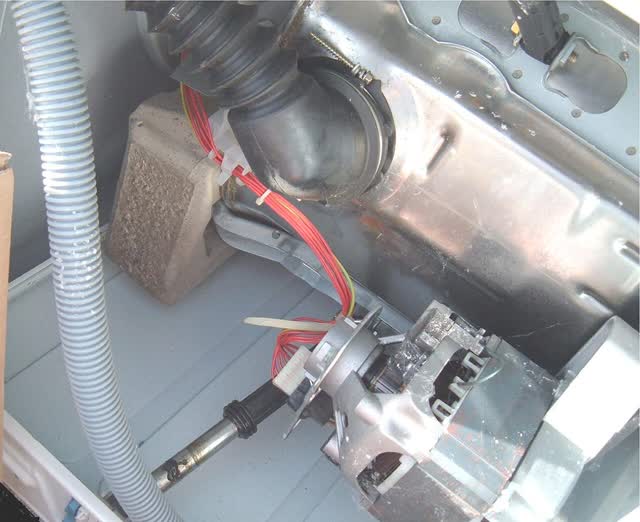
Hall sensor and tach generator (motor speed feedback)
Hall sensors are 3-wire devices (supply, ground, signal) that switch as magnets pass; tach generators are 2-wire coils that make a small AC voltage as the motor turns. Test the right way for the type.
 Component test · Washer
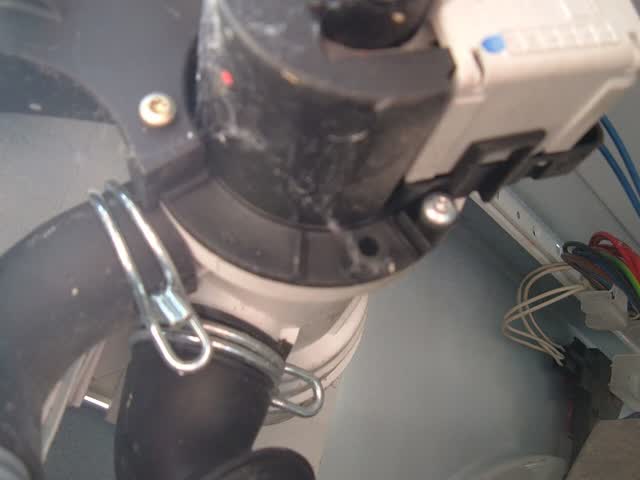
How to test a drain pump (washer and dishwasher)
Most drain pumps are small synchronous motors. Clear the filter and impeller first, then test the winding and the voltage. Published resistance values vary a lot by brand, so use the tech sheet for the number.
 Component test · Washer
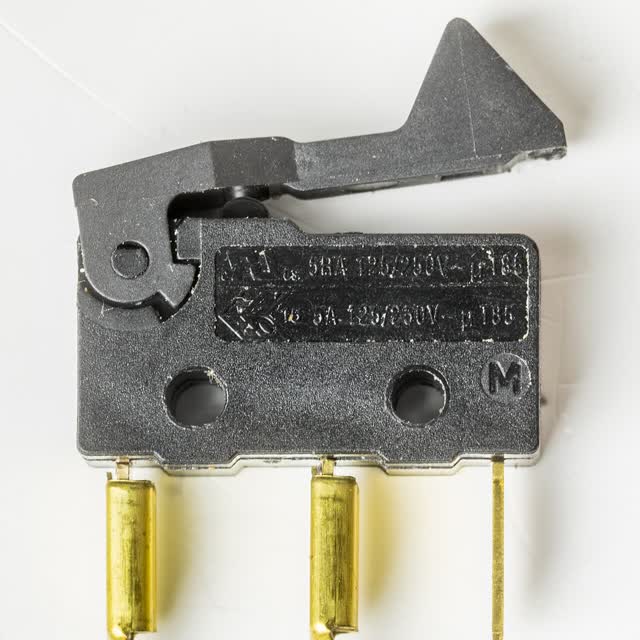
How to test a top-load washer lid switch / lid lock
Older top-loaders use a simple lid switch; most newer ones use a lid lock with a switch and a locking solenoid or motor. Test the switch contacts with the lid open and closed, and check the lock coil if there is one.
Component test · WasherHow to test a universal (brushed) motor and its carbon brushes
Universal motors run on AC or DC through carbon brushes that rub on a commutator. Brushes wear out and are the most common failure. Check brush length and the commutator, then test the field and armature with a meter.
Component test · WasherHow to test a washer water-level pressure switch
The level switch reads air pressure trapped in a hose from the bottom of the tub. As water rises, pressure flips its contacts. Most failures are a clogged or leaking air hose, not the switch.
Component test · WasherRotor position sensor (direct-drive motors)
On direct-drive motors the rotor position sensor sits on the stator and tells the inverter where the rotor magnets are. A bad sensor, cracked connector or water ingress gives motor errors even with good windings.
Component test · WasherWasher door / lid lock assembly
A lock assembly has a lock actuator (solenoid, motor, or wax/PTC heater) and one or more switches that tell the board it is locked. Check the command from the board, the actuator, the switch and the strike.
Component test · WasherWasher motor control unit / inverter board
Direct-drive and inverter washers use a motor control unit (MCU) that powers a 3-phase motor and reads a hall sensor or tach. Separate MCU, motor windings, hall sensor and harness before buying a board.
Installation · 3
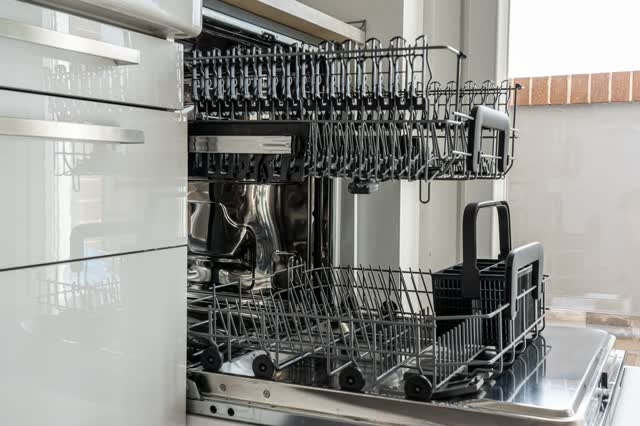 Install · Washer
Post-install checklist for water-connected appliances (leak, level, test cycle)
Most install callbacks are a slow leak, an unlevel unit or a drain that siphons. A short, repeatable checklist before leaving the job catches them.
Install · WasherStacking a washer and dryer with a stacking kit
Only stack front-load pairs the manufacturer lists as stackable, using that brand's kit for those models. The kit brackets attach to the washer top and hold the dryer feet; some kits also need a wall anchor. Lifting the dryer is a two-person job.
Install · WasherWasher install: hoses, shipping bolts, standpipe and leveling
The key steps are removing the shipping hardware, using new fill hoses, setting the drain hose correctly in a standpipe of the right height without sealing it, and leveling. Leftover shipping bolts cause violent shaking on the first spin.