Repair guides
Pick a type, an appliance or a brand. Every guide lists the tools, the safety call-outs, the steps and the reading you should expect.
Diagnostic · 374
Symptom → most likely cause, step by step
Component tests · 69
How to test a specific part, with expected readings
Installation · 33
Install, replace and hook up appliances correctly
Fundamentals · 24
Core skills every appliance tech uses
Appliance
Brand-specific guides
33 guides · Dryers
Diagnostic · 24
 Guide · Dryer
Burnt power cord or terminal block
Loose cord screws heat up under the dryer's high current and burn the terminal block. The fix is a new cord and block installed exactly per the install instructions for 3-wire or 4-wire.
 Guide · Dryer
Clothes come out wrinkled
Usually overload, over-drying, or clothes left in the drum. Check moisture sensing and cool-down.
 Guide · Dryer
Clothes too hot / dryer running hot
Most often restricted airflow; also a failed cycling thermostat, thermistor or stuck heater relay.
Guide · DryerDrum not turning (motor runs or hums)
Hand-turn the drum first: free-spinning means a broken belt; heavy or locked means rollers, idler, bearing or a jammed blower. Replace the idler with the belt when it is worn.
Guide · DryerDryer door won't stay closed or dryer stops when bumped
A worn strike or catch, a cracked plastic strike, or a weak door switch actuator makes the control see the door open. Inspect mechanicals before replacing the switch.
Guide · DryerDryer drum light not working
Bulb or LED module, door switch, or drum-light circuit. Some GE Profile models show a code for the drum light circuit.
Guide · DryerDryer overheating / cabinet too hot
Overheating is a fire risk. Restriction is the usual cause; after that, a cycling thermostat stuck closed, an element grounded to the housing, or a heater relay stuck on can keep heat on.
Guide · DryerDryer smells like gas (BLOCKED: refer)
Safety only. Do not diagnose the gas train. Leave, avoid ignition sources, and call the gas utility or a licensed gas technician.
Guide · DryerDryer squealing, thumping or grinding
Noise is mechanical wear in the drive and drum support: idler pulley, drum rollers, glides/felt seals, blower debris, or a belt with a flat spot. Identify by sound and hand-spin.
Guide · DryerDryer steam features not working
Steam dryers use a feeder or a hose supply. Check water, inlet filter and valve, then the steam generator thermistor.
Guide · DryerDryer stops early / clothes still damp
An auto cycle that ends early is usually the moisture sensor reading dry (residue, unlevel, small load). A dryer that stops mid-cycle and restarts later suggests motor overheating or a heat-related shutoff.
Guide · DryerDryer takes too long / vent restriction
Slow drying with heat present is almost always airflow. Check the whole exhaust path and its length before suspecting parts, then look at the moisture sensor and heat cycling.
Guide · DryerDryer trips the breaker
Tripping when heat starts usually points to a heater element shorted to its housing; tripping at start points to the motor or wiring; tripping at random may be a weak breaker or loose connection. Rule out the terminal block and cord first.
Guide · DryerDryer will not connect to the app (Wi-Fi)
Most cases are 2.4 GHz network, registration or router issues; a few are module faults.
Guide · DryerDryer won't start
Separate 'dead' (no display) from 'display OK but no start'. Common causes are supply, door switch, thermal fuse (on designs where it is in the motor/control circuit), start switch, belt switch and the drive motor.
Guide · DryerElectric dryer runs but no heat
Most electric no-heat calls come down to supply voltage (one breaker leg), a blown thermal fuse from a restricted vent, a tripped high-limit, or an open element. Always fix the airflow cause, or the new fuse will blow again.
Guide · DryerGas dryer runs but no heat (electrical checks only)
On a gas dryer the electrical side of the burner can be diagnosed safely with gas and power off: thermal fuse, high-limit, cycling thermostat, igniter, flame (radiant) sensor and gas valve coils. Gas supply, gas lines, the valve body and gas pressure are off-limits: refer to a licensed gas technician.
Guide · DryerHeat-pump (ventless) dryer drying poorly
Heat-pump dryers are slower than vented dryers by design. Real faults are usually clogged lint or condenser filters, a blocked drain path, or a cold room. The refrigerant circuit is sealed: diagnosis only.
Guide · DryerLint filter not detected or lint filter codes
Several dryers sense the lint filter. Seat the filter fully, clean it, then check the sensing switch.
Guide · DryerMoisture sensor problems (auto dry wrong)
Moisture sensing uses two metal bars that wet clothes bridge. Residue, unlevel installs, small loads and loose wiring cause most complaints.
Guide · DryerReading airflow / vent-test codes
Airflow codes rate vent restriction. Clean filter, then whole duct, then hood.
Guide · DryerSpeed Queen dryer runs but does not heat (electric)
Most cases are a blown thermal fuse and/or failed high-limit caused by a restricted vent. Clear the vent before replacing parts, then test the fuse, high-limit and element.
Guide · DryerVentless dryer water tank and condensate codes
Condenser and heat-pump dryers collect water in a tank or pump it out. Empty tank, clean float, clear hose.
Guide · DryerWater or condensation inside the dryer
Usually a long, cold or sagging vent where moisture condenses and runs back, or a blocked vent.
Component tests · 6
 Component test · Dryer
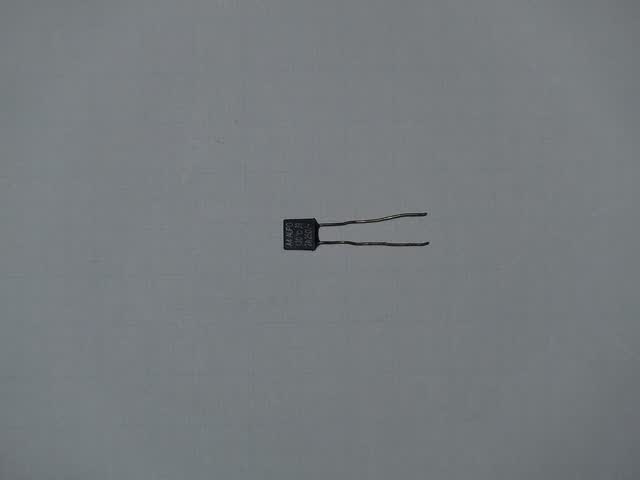
How to test a dryer cycling (operating) thermostat
The cycling thermostat switches the heat on and off to hold the exhaust temperature. It should be closed when cold and open when hot. A stuck-closed unit overheats the dryer; a stuck-open unit gives no heat.
 Component test · Dryer
How to test a dryer drive motor and its centrifugal switch
Dryer motors have a centrifugal switch that drops out the start winding once the motor is up to speed and, on most models, also closes the heater circuit. Test the windings at the motor and the switch contacts in both positions.
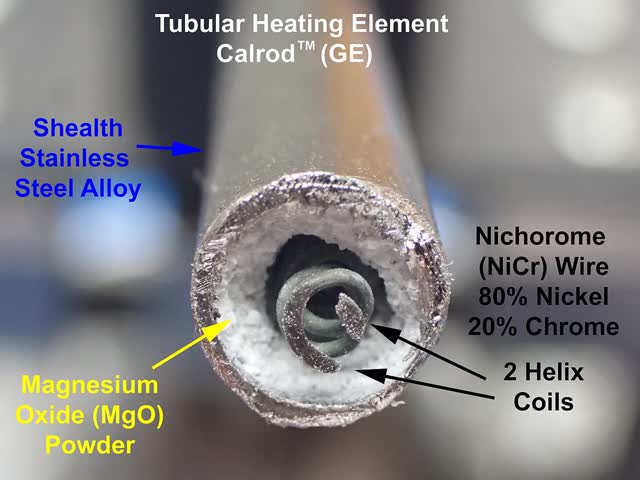
Component test · DryerHow to test a dryer heating element
An electric dryer element is a resistance coil on 240 V. Test it across the terminals and to ground. Most read in the low teens of ohms; use R = V²/W from the element rating to check yours.
Component test · DryerHow to test a dryer thermal fuse
A thermal fuse is a one-time safety link that opens permanently when the exhaust gets too hot. It is a simple continuity test, but a blown fuse is a symptom: the real cause is almost always a restricted vent or a failed cycling thermostat.
 Component test · Dryer
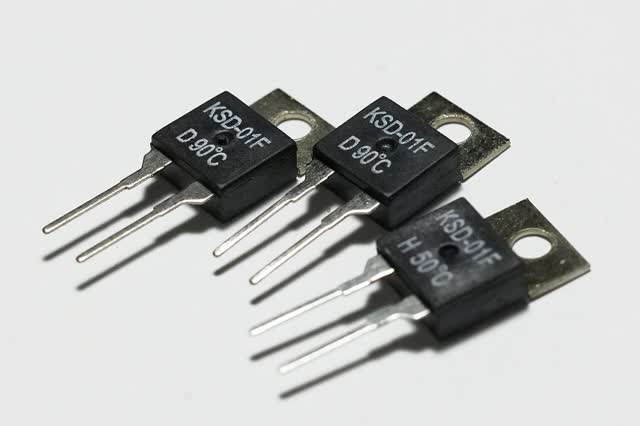
How to test a high-limit thermostat (dryer and similar heaters)
A high-limit is a normally-closed bimetal switch that opens if the heater area overheats and closes again when it cools. A room-temperature continuity test catches the common "stuck open" failure, but it cannot prove the opening temperature is right.
 Component test · Dryer
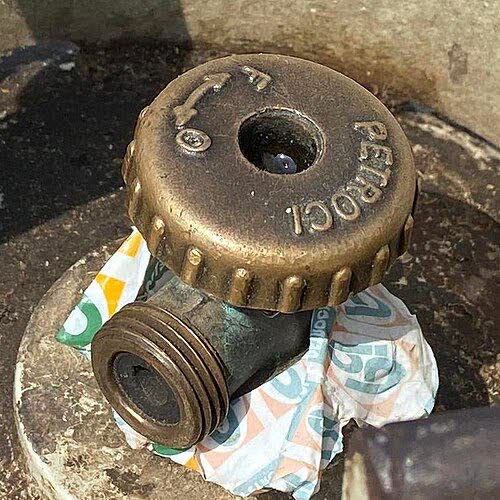
How to test gas dryer valve coils (electrical test only)
The gas valve has solenoid coils that open when the igniter is hot. You may test the coils with a meter at their terminals with power off. Gas line, valve body and burner work is blocked: refer to a licensed gas technician.
Installation · 3
Install · DryerDryer vent installation: materials, length, elbows and termination
Use 4 in rigid or semi-rigid metal duct with a smooth interior, keep the run within the code or manufacturer limit (the model code limit is 35 ft, reduced for each elbow, unless the dryer maker allows longer), and terminate outside with a backdraft damper and no screen. Never vent into an attic, crawl space or wall cavity.
Install · DryerElectric dryer cord change (3-wire to 4-wire or reverse)
Match the cord to the receptacle. With a 3-wire cord the neutral-to-cabinet ground strap (or green screw link) stays in place. With a 4-wire cord the strap is removed, the green wire goes to the cabinet ground screw and the white to the center neutral terminal only.
Install · DryerGas dryer connection (BLOCKED: refer to a licensed gas installer)
Connecting, disconnecting or leak-testing a gas line is licensed gas work in most US jurisdictions. A handyman may prepare the space, the 120 V outlet and the vent, then the gas connection and leak test go to a licensed gas installer or plumber.