Repair guides
Pick a type, an appliance or a brand. Every guide lists the tools, the safety call-outs, the steps and the reading you should expect.
Diagnostic · 374
Symptom → most likely cause, step by step
Component tests · 69
How to test a specific part, with expected readings
Installation · 33
Install, replace and hook up appliances correctly
Fundamentals · 24
Core skills every appliance tech uses
Appliance
Brand-specific guides
69 guides
Refrigerators · 8
See all 8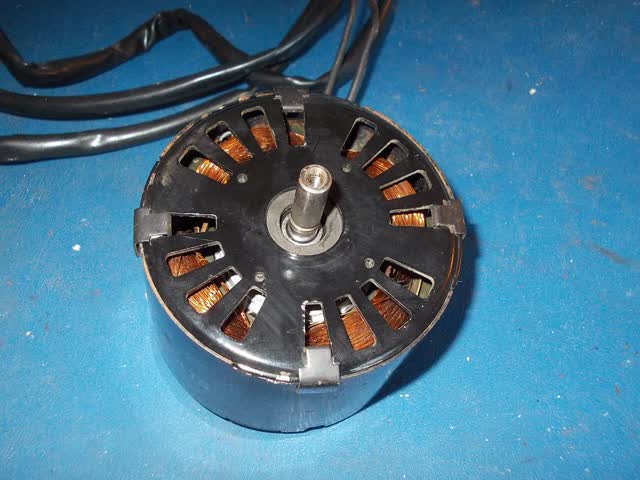 Component test · Refrigerator
How to check an ECM / brushless DC fan motor (what you can test safely)
Many modern refrigerator fans are brushless DC motors with their electronics inside the motor. An ohmmeter cannot judge them reliably. The safe test is to confirm the supply voltage and control/feedback signals at the connector, then swap the motor if the signals are right.
 Component test · Refrigerator
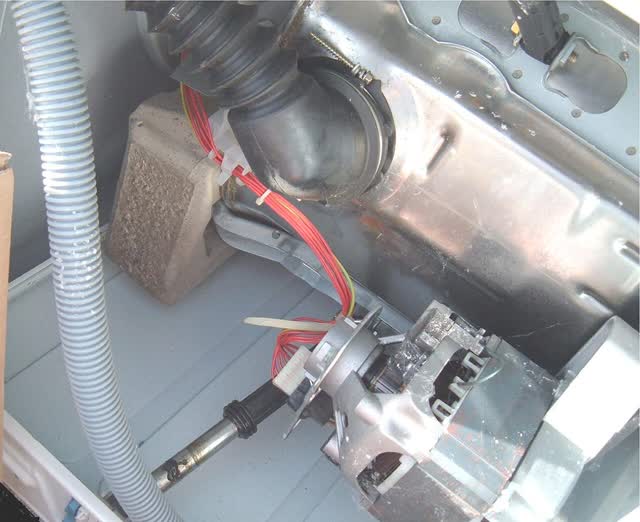
How to test a refrigerator air damper (damper motor or damper control)
The damper opens and closes the cold-air path from the freezer to the fresh-food section. Older ones are mechanical (bellows), newer ones use a small motor driven by the board. Ice in the duct is a frequent cause.
 Component test · Refrigerator
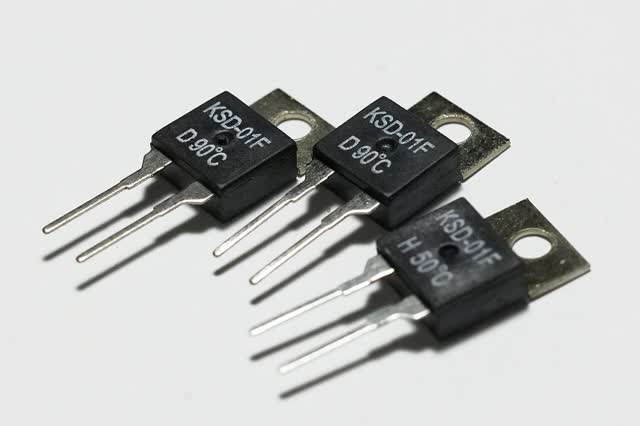
How to test a refrigerator bi-metal defrost thermostat
The bi-metal (defrost termination thermostat) is wired in series with the defrost heater. It is closed only when the evaporator is cold and opens once the coil warms during defrost. Testing it at room temperature gives a false "bad" result: it must be cold.
 Component test · Refrigerator
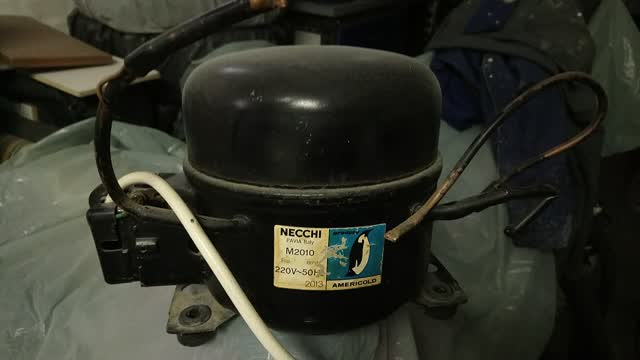
How to test a refrigerator compressor start relay (PTC) and overload (electrical only)
The start device (PTC or current relay) and the overload plug onto the compressor terminals. Test them off the compressor. Electrical tests only: any compressor replacement, refrigerant work or brazing is a sealed-system job for an EPA 608-certified technician.
 Component test · Refrigerator
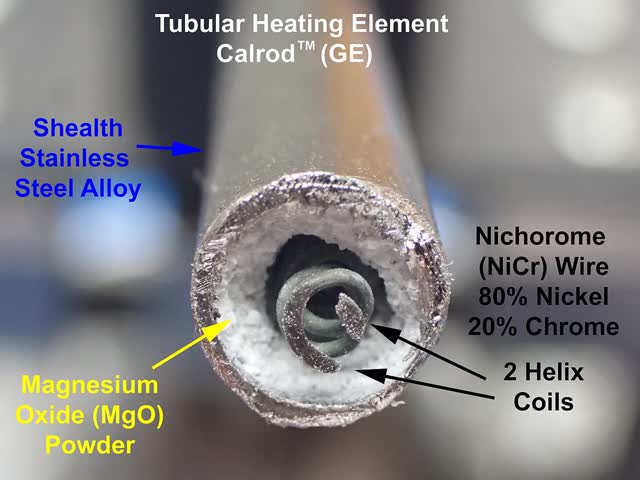
How to test a refrigerator defrost heater
The defrost heater (glass tube, metal sheath or foil type) melts frost off the evaporator a few times a day. A good heater reads in the low tens of ohms; use the wattage math to check the exact value.
Component test · RefrigeratorHow to test a refrigerator mechanical defrost timer
Older refrigerators use a motor-driven timer that switches between cooling and defrost. Turning the advance screw lets you force defrost and test the contacts; terminal numbering varies, so use the diagram on the timer or tech sheet.
Washers · 8
See all 8Component test · WasherHall sensor and tach generator (motor speed feedback)
Hall sensors are 3-wire devices (supply, ground, signal) that switch as magnets pass; tach generators are 2-wire coils that make a small AC voltage as the motor turns. Test the right way for the type.
 Component test · Washer
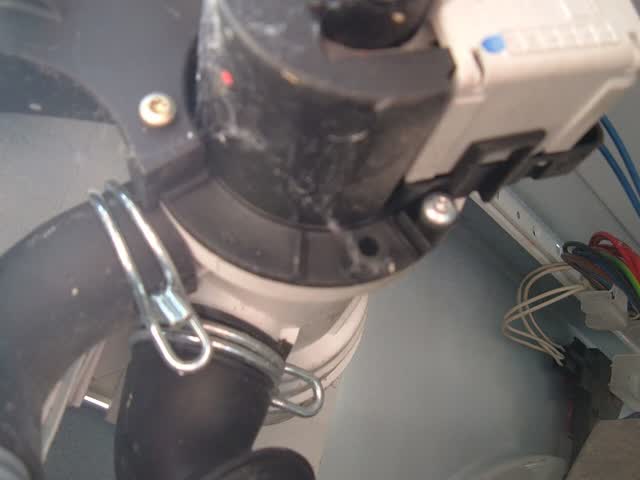
How to test a drain pump (washer and dishwasher)
Most drain pumps are small synchronous motors. Clear the filter and impeller first, then test the winding and the voltage. Published resistance values vary a lot by brand, so use the tech sheet for the number.
 Component test · Washer
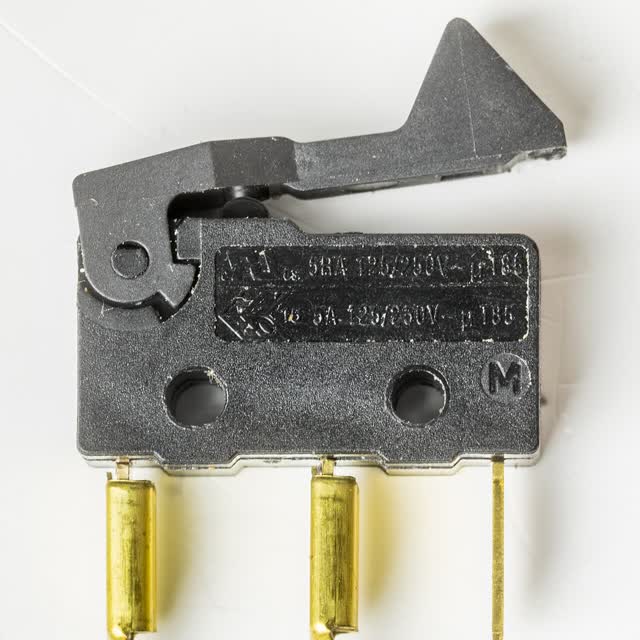
How to test a top-load washer lid switch / lid lock
Older top-loaders use a simple lid switch; most newer ones use a lid lock with a switch and a locking solenoid or motor. Test the switch contacts with the lid open and closed, and check the lock coil if there is one.
Component test · WasherHow to test a universal (brushed) motor and its carbon brushes
Universal motors run on AC or DC through carbon brushes that rub on a commutator. Brushes wear out and are the most common failure. Check brush length and the commutator, then test the field and armature with a meter.
Component test · WasherHow to test a washer water-level pressure switch
The level switch reads air pressure trapped in a hose from the bottom of the tub. As water rises, pressure flips its contacts. Most failures are a clogged or leaking air hose, not the switch.
Component test · WasherRotor position sensor (direct-drive motors)
On direct-drive motors the rotor position sensor sits on the stator and tells the inverter where the rotor magnets are. A bad sensor, cracked connector or water ingress gives motor errors even with good windings.
Dryers · 6
 Component test · Dryer
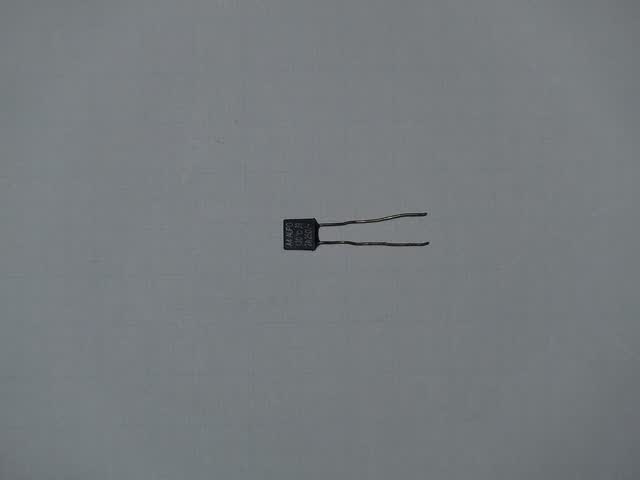
How to test a dryer cycling (operating) thermostat
The cycling thermostat switches the heat on and off to hold the exhaust temperature. It should be closed when cold and open when hot. A stuck-closed unit overheats the dryer; a stuck-open unit gives no heat.
Component test · DryerHow to test a dryer drive motor and its centrifugal switch
Dryer motors have a centrifugal switch that drops out the start winding once the motor is up to speed and, on most models, also closes the heater circuit. Test the windings at the motor and the switch contacts in both positions.
Component test · DryerHow to test a dryer heating element
An electric dryer element is a resistance coil on 240 V. Test it across the terminals and to ground. Most read in the low teens of ohms; use R = V²/W from the element rating to check yours.
Component test · DryerHow to test a dryer thermal fuse
A thermal fuse is a one-time safety link that opens permanently when the exhaust gets too hot. It is a simple continuity test, but a blown fuse is a symptom: the real cause is almost always a restricted vent or a failed cycling thermostat.
Component test · DryerHow to test a high-limit thermostat (dryer and similar heaters)
A high-limit is a normally-closed bimetal switch that opens if the heater area overheats and closes again when it cools. A room-temperature continuity test catches the common "stuck open" failure, but it cannot prove the opening temperature is right.
 Component test · Dryer
How to test gas dryer valve coils (electrical test only)
The gas valve has solenoid coils that open when the igniter is hot. You may test the coils with a meter at their terminals with power off. Gas line, valve body and burner work is blocked: refer to a licensed gas technician.
Dishwashers · 5
Component test · DishwasherDishwasher door latch and door switch
The latch carries one or two switches that close when the door latches. The board will not start a cycle without them. Test continuity with the latch engaged and released.
Component test · DishwasherHow to test a dishwasher circulation (wash) pump motor
The wash motor pushes water to the spray arms. Older units use an AC induction motor; many newer ones use a brushless DC motor driven by the board. Rule out a jam and a filter clog before testing, and use the tech sheet for winding values.
Component test · DishwasherHow to test a dishwasher heating element
Many US dishwashers have a hidden or visible loop element under the tub. A good one reads in the tens of ohms. A leak to the tub trips the GFCI even when the resistance looks fine, so always check to ground.
Component test · DishwasherHow to test a float switch (dishwasher overfill and similar)
A float rides up with water and opens or closes a small switch under the tub. It stops overfill or flags a leak. Make sure the float moves freely before blaming the switch.
Component test · DishwasherHow to test a wax motor (dispenser, lid lock, diverter actuators)
A wax motor is a slow thermal actuator: a small heater melts wax that pushes a plunger out over a minute or so. Test the heater resistance and watch it extend when powered.
Ranges & Ovens · 7
See all 7 Component test · Range / Oven
Glow-bar (hot surface) oven igniter: amp draw test
In gas ovens the glow-bar igniter is wired in series with the oven safety valve. The valve opens only when enough current flows, so a weak igniter can glow and still not open the valve. Measure amps, not just glow.
Component test · Range / OvenHow to test an infinite switch (electric surface element)
An infinite switch cycles a surface element on and off to set the heat level. Test the two line-to-element contact pairs on high and off. Also test the element itself before replacing the switch.
Component test · Range / OvenHow to test an oven bake or broil element
Bake and broil elements are 240 V resistance heaters. A good one reads somewhere in the teens to about 40 Ω depending on wattage, and never shows continuity to its metal sheath.
 Component test · Range / Oven
How to test an oven RTD temperature sensor
Most electronic ovens use a platinum RTD probe, which works the opposite way to an NTC: resistance rises with heat. Many common sensors read about 1,080 Ω at room temperature and climb roughly 2 Ω per °F.
 Component test · Range / Oven
Induction coil and IGBT power board (trained techs)
Induction boards rectify line voltage to a high DC bus and switch it at high frequency through IGBT transistors into a copper coil. Field work is limited to pan check, codes, input power, coil resistance and visual inspection; board-level repair is not a field job.
Component test · Range / OvenOven door lock motor and lock switches (self-clean)
Self-clean ovens use a small motor or solenoid with cam switches that tell the control the lock position. A lock stuck after self-clean is often a cooled-down timing issue; check the motor, the switches and the control output.
Microwaves · 4
 Component test · Microwave
Magnetron: filament and filament-to-case tests (microwave)
The magnetron turns high voltage into microwave energy. An ohmmeter can catch an open filament or a filament shorted to the case, but it cannot prove the tube makes full power. Rule out the HV diode, capacitor and transformer before ordering a magnetron.
Component test · MicrowaveMicrowave high-voltage diode test
The HV diode works with the HV capacitor to double the transformer voltage for the magnetron. It is made of many junctions in series, so an ordinary meter only shows it is not shorted. A shorted diode is a classic cause of no heat with a loud hum.
Component test · MicrowaveMicrowave high-voltage transformer windings
The HV transformer has a primary, a high-voltage secondary and a low-voltage filament winding. Resistance checks find opens and shorts to the core; turn-to-turn shorts may still need a known-good comparison.
Component test · MicrowaveMicrowave HV capacitor and bleeder resistor
The HV capacitor has a built-in bleeder resistor meant to drain its charge, but bleeders fail, so always discharge by hand. A shorted capacitor blows the HV fuse immediately. Resistance tests catch shorts; a capacitance reading is better.
Air Conditioners · 4
Component test · Air Conditioner24 V control transformer (HVAC)
The control transformer steps line voltage down to about 24 V AC for the thermostat, board and contactor coil. Measure primary and secondary under power; a blown low-voltage fuse means a short in the 24 V wiring, not a bad transformer.
Component test · Air ConditionerContactor (HVAC): coil, contacts and voltage drop
The contactor closes line voltage to the compressor and fan when it gets 24 V on its coil. Check coil voltage, coil resistance, contact condition and voltage drop across closed contacts.
 Component test · Air Conditioner
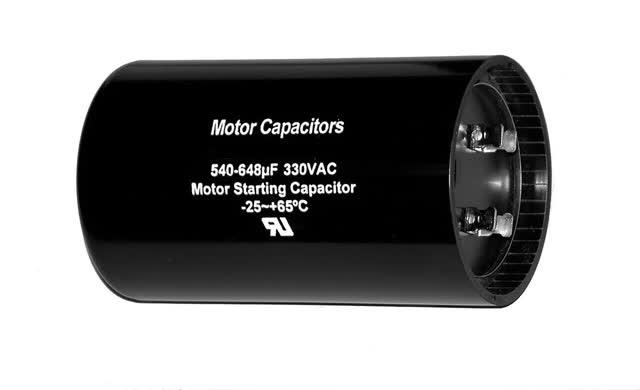
Dual run capacitor (HVAC condenser): testing both sections
A dual capacitor has C (common), HERM (compressor) and FAN terminals with two µF ratings in one can. Test C-HERM and C-FAN separately against the label; one section can fail while the other is fine.
Component test · Air ConditionerMini-split outdoor inverter board: what is safe to check
Mini-split outdoor boards rectify line voltage to a high DC bus and drive the compressor and fan. Field checks are input power, communication, error codes and compressor winding balance. Board DC bus voltage is dangerous after shutdown.
TVs · 3
 Component test · TV
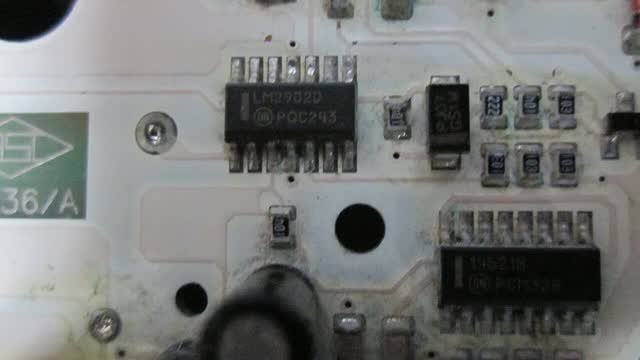
T-con (timing control) board: board or panel?
The T-con converts video from the main board into the signals that drive the panel rows and columns. Loose ribbons, a blown T-con fuse or a failed T-con cause image faults; lines that stay fixed in the same place usually mean the panel itself.
 Component test · TV
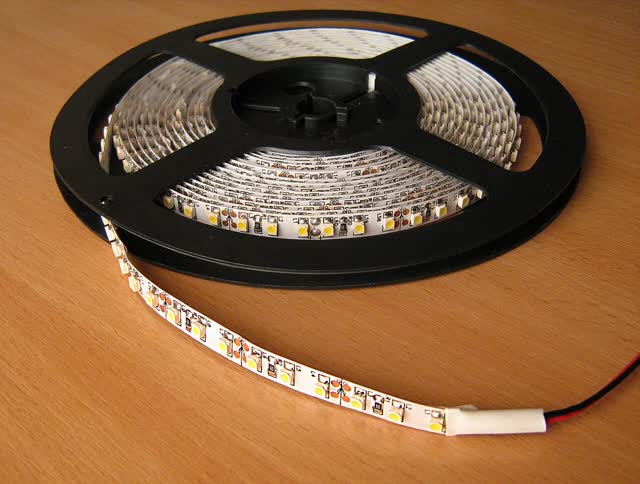
TV LED backlight strips and LED driver
LED strips are wired in series strings and run from a constant-current driver at high DC voltage (often around 80-200 V total). One dead LED opens the string and the driver shuts down. Test LEDs with a backlight tester, not a meter diode range, and replace all strips as a set.
Component test · TVTV power supply board
The power supply board makes a standby voltage that is always on, then switches on the main rails when the main board sends a power-on signal. Check standby, then the power-on signal, then main rails. The primary side holds a high-voltage charge.
Furnaces · 1
Tech Fundamentals · 23
See all 23Component test · FundamentalsFlame sensor (flame rectification) microamp test
The flame sensor rod lets a tiny DC current flow through the flame. The board shuts the gas off if it does not see enough microamps. Clean first, then measure in series with a meter that reads DC µA.
Component test · FundamentalsFurnace hot surface igniter (HSI)
Furnace HSIs are silicon carbide or silicon nitride elements. Measure cold resistance against the type; replace if open or far out of range. Handle only by the base.
Component test · FundamentalsFuses on control boards and in-line fuses
Board fuses protect the board supply or a high-current output. A blown fuse almost always means something shorted downstream; replacing it without finding the cause usually ends in another blown fuse or a destroyed board.
 Component test · Fundamentals
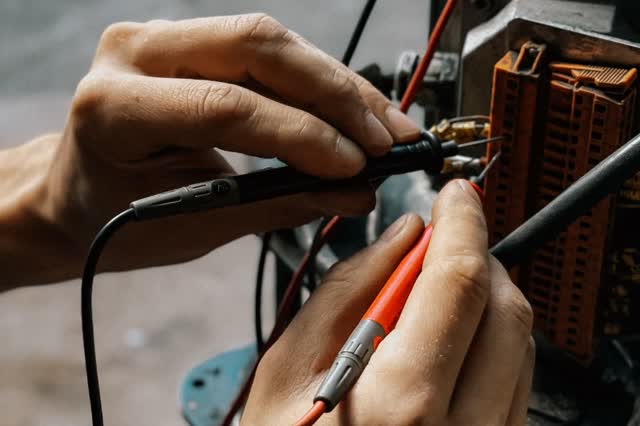
GFCI and AFCI trips caused by appliances
Class A GFCIs must trip between about 4 and 6 mA of leakage to ground, so a slightly leaky heater or motor can trip them. AFCIs react to arcing signatures and also contain a ground-fault element with a higher threshold. Find out whether the appliance leaks before blaming the device.
Component test · FundamentalsHow to test a door switch (refrigerator, dryer, dishwasher)
Door switches tell the control or the circuit that the door is shut. Some are normally open, some normally closed, and many have more than one set of contacts (light + fan, or start circuit). Test each pair in both door positions.
Component test · FundamentalsHow to test a mechanical timer (washer, dryer) contacts and motor
Mechanical timers are a small motor driving a cam stack that opens and closes many contacts. You need the timer chart (on the wiring diagram) to know which contacts should be closed at each dial position.