Repair guides
Pick a type, an appliance or a brand. Every guide lists the tools, the safety call-outs, the steps and the reading you should expect.
Diagnostic · 374
Symptom → most likely cause, step by step
Component tests · 69
How to test a specific part, with expected readings
Installation · 33
Install, replace and hook up appliances correctly
Fundamentals · 24
Core skills every appliance tech uses
Appliance
Brand-specific guides
30 guides · Refrigerators
Diagnostic · 30
 Guide · Refrigerator
Compact / mini-fridge not cooling
First decide whether it is a compressor or thermoelectric unit. Thermoelectric units are limited by room temperature. On compressor units, the start relay/overload is the cheap fix and sealed-system faults usually mean replacement.
 Guide · Refrigerator
Defrost system failure (frosted evaporator)
The defrost system (heater, defrost thermostat/thermal fuse or sensor, and the timer or control board) must melt the coil frost every few hours. If any of them fails, the coil turns into a block of ice and airflow stops. Test the heater and the limit with the coil still cold.
 Guide · Refrigerator
Demo / showroom mode stuck (OFF, OF OF, 'cooling off')
Demo (showroom) mode runs lights and display with cooling off. It's a key combination, not a repair. If it returns after exit, the panel may be faulty.
 Guide · Refrigerator
Fresh-food light out (LED or bulb)
On LED models the cause is usually a failed LED module, the door switch, or the board that powers the LEDs. A light failure alone does not affect cooling.
 Guide · Refrigerator
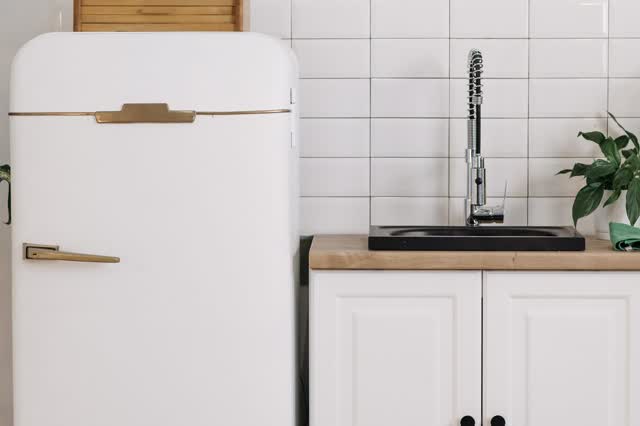
Fresh-food section too cold (freezing food)
Check settings, vent placement, room temperature and the ice-maker-without-water condition first. If those are fine, suspect a damper stuck open or a sensor reading warm.
 Guide · Refrigerator
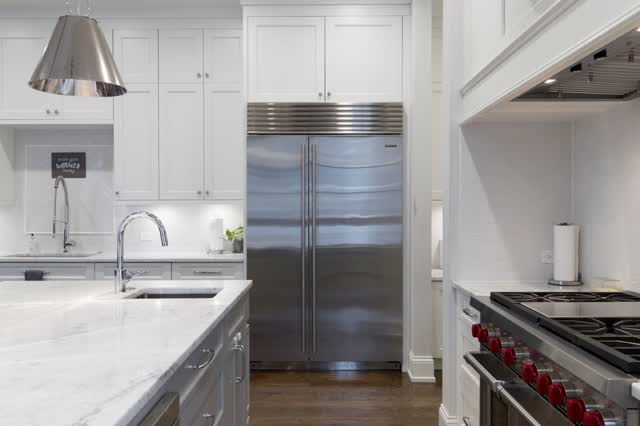
Fresh-food section warm, freezer cold
On single-evaporator units, cold air comes from the freezer through a damper or duct. A frosted evaporator, a stopped evaporator fan or a stuck damper will starve the fridge side. On dual-evaporator units (many Samsung models), the fridge evaporator, its fan and its defrost circuit are the usual suspects.
Guide · RefrigeratorFridge or freezer door not sealing
A bad seal lets moist air in, causing frost, sweating and long run times. Most cases are leveling, a folded gasket or a blocking item; the gasket itself is the last step.
Guide · RefrigeratorIce maker not making ice
Confirm the freezer or ice room is cold enough, the ice maker is on and the bucket isn't fooling the full sensor, then run the ice maker test. If the test runs but no water arrives, look at water pressure, the filter, a frozen fill tube or the inlet valve.
 Guide · Refrigerator
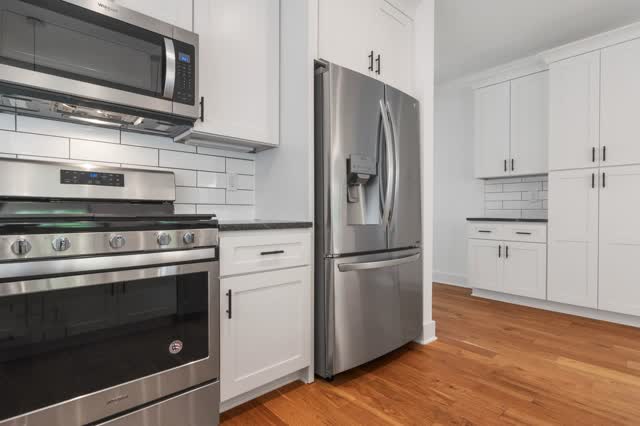
LG Craft Ice not making round ice
Craft Ice is slow by design and needs a cold freezer, water and the right mode. Rule out start-up time, mode setting and bin position before blaming the Craft Ice module.
Guide · RefrigeratorLG linear/inverter compressor fridge not cooling
Rule out demo mode, airflow, fans and defrost first, then use LG's forced-run diagnostic to see whether the compressor runs. If the compressor runs but doesn't cool, or won't start with a good board, it's a sealed-system failure: refer it to LG service or an EPA 608-certified technician and check the compressor warranty.
Guide · RefrigeratorPremium built-in refrigerator: one section warm (Sub-Zero vs. Monogram logic)
Start by knowing the architecture. Sub-Zero built-ins have two separate sealed systems, so a warm section means a fault in that section's own fan, defrost, sensor or system. Monogram built-ins share one freezer evaporator and feed fresh food through a damper, so a warm fresh-food side with a cold freezer points at the damper, airflow or an iced return passage.
Guide · RefrigeratorRefrigerator clicking, compressor won't start (start relay)
The classic pattern is a failed start relay: the compressor can't start, overheats in seconds and the overload clicks off, then retries. Replace the relay first; if it keeps clicking with a good relay, the compressor is suspect (sealed-system work, refer out).
 Guide · Refrigerator
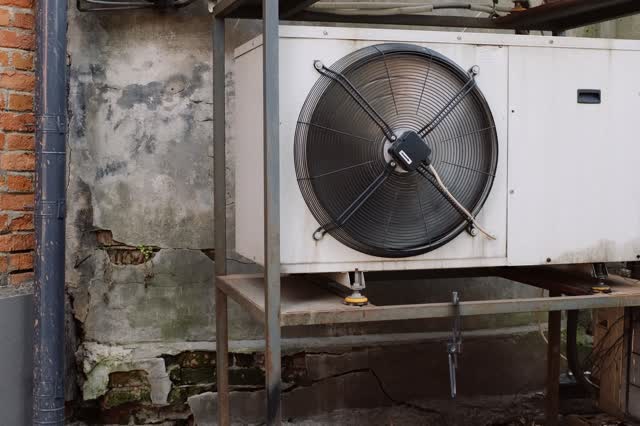
Refrigerator condenser fan not running
The condenser fan pulls room air over the condenser and compressor. A dirty coil or a seized or failed fan makes the compressor run hot and long and can trip its overload. Clean first, then check the fan and the supply to it.
Guide · RefrigeratorRefrigerator dead: no lights, no display, nothing running
Work from the outlet inward: supply, cord, door/display harness, then the boards. Many 'dead display' calls on French-door and side-by-side units are harness faults at the door hinge, not failed boards.
Guide · RefrigeratorRefrigerator door alarm keeps beeping
The alarm follows the door switch, not the door itself. A door that doesn't fully close, a blocked shelf, a misaligned door or a failed switch keeps it sounding. Some beeps are power-outage alerts instead.
Guide · RefrigeratorRefrigerator ice maker overflowing (ice block in the bin)
Overflow usually means water entering when it should not: an inlet valve that seeps closed because of low pressure or debris, a fill tube that froze and diverts water, or a cracked fill tube. A tray that is not level or a misreading ice maker can also overfill.
 Guide · Refrigerator
Refrigerator leaking water (inside or on the floor)
Water inside the cabinet usually means a clogged or frozen defrost drain. Water on the floor usually comes from the supply line, inlet valve, filter housing, or an overflowing or mis-seated drain pan. Level and tilt also matter.
Guide · RefrigeratorRefrigerator noisy (fans, compressor, clicking)
Find where the noise is and when it happens. Scraping in the freezer that stops when the door opens is the evaporator fan, often hitting ice. A squeal from the bottom rear is the condenser fan. Clicking every few minutes with no cooling is a start problem.
Guide · RefrigeratorRefrigerator not cooling (both sections warm)
Rule out settings, demo/cooling-off mode and airflow first, then confirm whether the compressor and condenser fan run. If the compressor is running but nothing gets cold, or it won't start even though the start components and power check out, it's a sealed-system problem and goes to an EPA 608-certified tech.
Guide · RefrigeratorRefrigerator sweating: condensation outside or inside the cabinet
Warm, humid air meeting a cold surface causes condensation. Look at door seals, door alignment, room humidity and settings first. Then check the anti-condensation heaters where fitted, such as the French-door center flipper (mullion) heater or the cabinet face heaters.
Guide · RefrigeratorRefrigerator temperature fluctuates (warm, then cold)
Swings usually come from a frosted evaporator (defrost failing), a sticking damper, or a sensor problem. Check frost first, then damper and thermistor.
Guide · RefrigeratorRefrigerator water dispenser keeps dripping after use
A few drops right after dispensing is normal. Longer dripping is usually trapped air in the lines after a filter change or door removal, which pushes water out as it expands. If purging does not help, check filter seating, levelling and the inlet valve.
Guide · RefrigeratorRefrigerator water tastes or smells bad
Bad taste is almost always an old or wrong filter, water sitting in the lines, or new-install tubing. Fix the filter and flush before suspecting the supply itself.
Guide · RefrigeratorSabbath mode: lights, dispenser or alarms not working
Sabbath mode disables lights, alarms, dispenser and the panel response while cooling continues. It can be turned on by accident. Exit it with the model's key combination; it may also time out (LG 96 h, Samsung 85 h).
Guide · RefrigeratorSamsung Family Hub screen frozen or blank
The Family Hub screen has its own power switch inside the right door. A switch reset fixes most freezes; if not, a full power cycle, software update or service on the screen/board is next.
Guide · RefrigeratorSamsung in-door ice maker / ice room icing up
Moist air leaking into the in-door ice room freezes on the fan, ice maker and bucket. Thawing it only fixes it for a while. A lasting fix means finding and sealing the air leak and correcting airflow, often with Samsung's updated parts and procedures.
Guide · RefrigeratorTop-mount refrigerator: defrost timer and cold control check
On conventional top-mounts, a mechanical defrost timer and a cold control decide when the unit cools or defrosts. Advancing the timer by hand tells you in minutes whether the timer, the defrost parts or the cold control is at fault.
Guide · RefrigeratorWater dispenser not working (ice maker may still work)
If ice is still being made, the water supply reaches the valve, so the fault is usually a frozen door line, the dispenser-side valve coil, the dispenser switch or a lock mode. Isolate the problem by section.
Guide · RefrigeratorWater dispenser slow or weak flow
Work from the filter outward: filter, supply flow at the fridge, then the fridge's inlet valve and lines. Freezing in the door line is another cause.
Guide · RefrigeratorWater filter light won't reset / filter bypass
Most filter lights never reset on their own. The reset key combination depends on the model. On RFID-filter models (e.g. GE), a non-genuine or badly seated filter can disable ice and water.