Repair guides
Pick a type, an appliance or a brand. Every guide lists the tools, the safety call-outs, the steps and the reading you should expect.
Diagnostic · 374
Symptom → most likely cause, step by step
Component tests · 69
How to test a specific part, with expected readings
Installation · 33
Install, replace and hook up appliances correctly
Fundamentals · 24
Core skills every appliance tech uses
Appliance
Brand-specific guides
26 guides · Ranges & Ovens
Diagnostic · 26
 Guide · Range / Oven
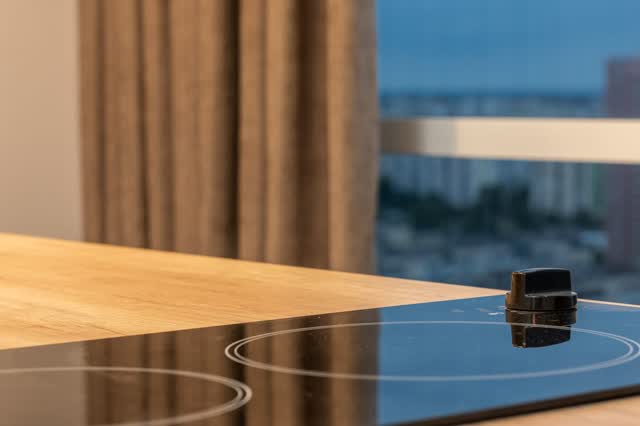
Control panel beeping, phantom key presses or F-codes
Most keypad faults come from moisture or grease behind the touch overlay, or a worn membrane, often after self-clean or a boilover. Isolate the keypad from the control by unplugging its ribbon before buying a board.
 Guide · Range / Oven
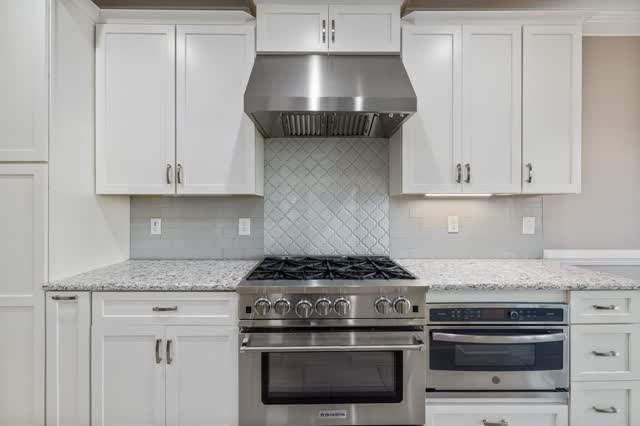
Convection fan not running
Check the blade spins freely, then the motor winding, then whether the control sends 120 V. Bake and broil still work without the fan, so customers often notice only uneven results.
 Guide · Range / Oven
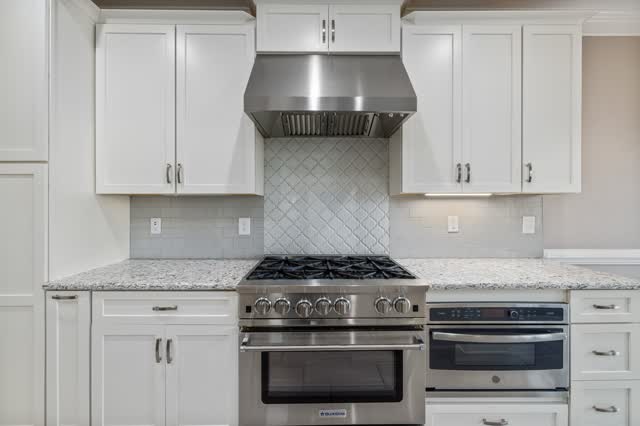
Convection oven baking unevenly
Fan or element.
Guide · Range / OvenElectric coil cooktop sparking
A damaged coil or burnt receptacle. Replace both if the terminals are burnt.
 Guide · Range / Oven
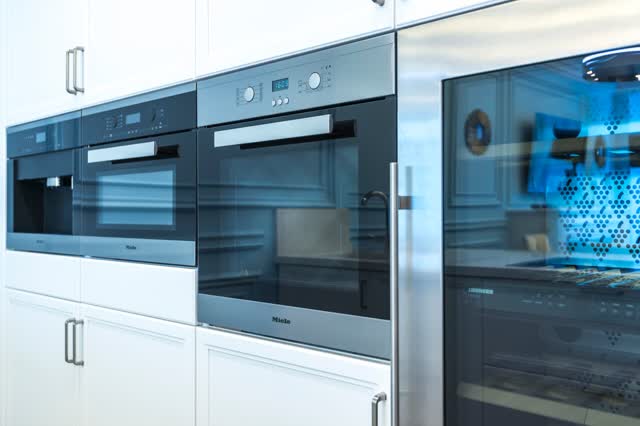
Electric oven not heating (bake or broil)
Most no-heat calls on electric ovens come down to a burned-out bake or broil element, a failed oven temperature sensor, or loss of one 120 V leg of the 240 V supply. Test elements and sensor with power off before suspecting the control board.
Guide · Range / OvenElectric surface element not heating (coil or radiant)
On coil tops, start with the element and its receptacle (swap with a working element of the same size). On radiant glass tops, test the element terminals under the glass, then the infinite switch that powers it. Electronic-control cooktops use relays on a board instead of infinite switches.
 Guide · Range / Oven
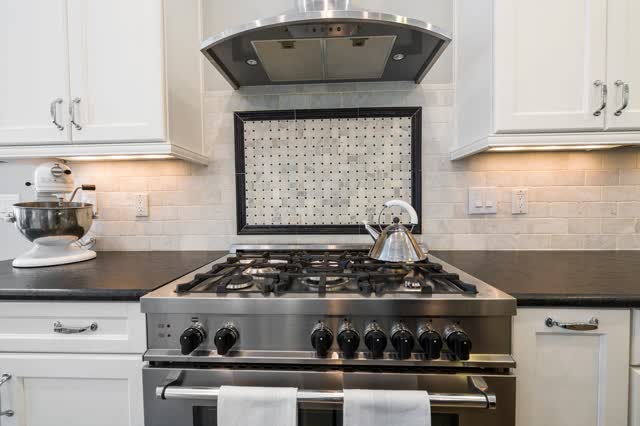
Gas cooktop burner won't spark or won't light
No click at any burner points to the spark module or loss of 120 V. No click at one burner is that burner's switch or electrode lead. Clicks but no flame is usually a misplaced cap, a clogged ignition port or a spark that grounds out before reaching the port. Any problem with gas flow itself is blocked: refer to a licensed gas tech.
Guide · Range / OvenGas cooktop igniters click non-stop
The spark module only fires when a burner spark switch feeds it power, so constant clicking almost always means a wet or shorted switch. If clicking continues with the switches disconnected, the module is stuck. Clicking only after the burner lights points to the electrode, burner cap or ground/polarity instead.
Guide · Range / OvenGas oven not heating (igniter glows, no flame)
On glow-bar ovens the igniter is wired in series with the gas safety valve; a weak igniter can glow but not pull enough current to open the valve. The igniter current check is an electrical test. Anything involving the gas valve, regulator, orifices or gas lines is off limits: refer to a licensed gas technician.
Guide · Range / OvenGlass cooktop element stays on high / won't turn off
On knob-controlled cooktops this is almost always an infinite switch with welded contacts. On touch-control cooktops a relay on the control or relay board can stick closed. Note that radiant elements normally cycle on and off at lower settings; that cycling is not a fault.
 Guide · Range / Oven
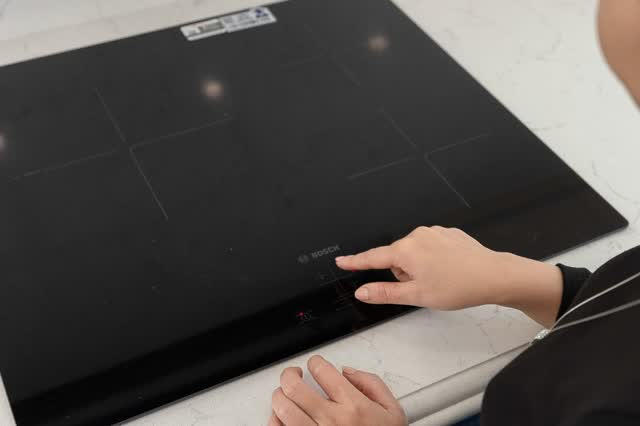
Induction cooktop not detecting pan
Induction only heats magnetic cookware large enough for the zone and centered on it. Rule out cookware first; if good pans fail on a zone, the zone's coil, generator (inverter) board or firmware is at fault, which is board-level service.
Guide · Range / OvenInduction zone shuts off or shows overheat error
Induction electronics depend on the cooling fan. Rule out blocked vents and normal power limiting first, then check the fan. A repeat driver code with a working fan points to the generator board, which is replaced as an assembly.
Guide · Range / OvenOven air fry mode not crisping
Air fry needs the convection fan and the right tray.
Guide · Range / OvenOven broil not working (bake works)
On electric ovens this is usually the broil element. Gas broil burners need a licensed technician for the gas side.
Guide · Range / OvenOven clock blank after power outage
Breaker, fuse or board.
Guide · Range / OvenOven door stuck locked after self-clean
The lock stays engaged until the cavity cools (most models release below about 550°F). If it stays locked when cold, the lock motor, its position switch or the control is at fault. Dead ovens after self-clean often have an open thermal fuse.
Guide · Range / OvenOven door won't close fully
Usually hinges or a misseated door.
Guide · Range / OvenOven fan noisy (convection or cooling fan)
Convection fan noise is usually worn motor bearings or a loose/warped blade. Note that many ovens run a cooling fan after cooking ends; that is normal. A grinding noise during self-clean start can be the door lock motor rather than a fan.
Guide · Range / OvenOven light not working
Usually the bulb. If not, check the socket, switch or control.
Guide · Range / OvenOven smoking
Usually spills or new-oven burn-off.
Guide · Range / OvenOven takes too long to preheat
First confirm it is really slow: many ovens take around 10-15 minutes to reach 350°F, longer with large cavities or convection preheat. On electric ovens a partly failed bake element or a dead broil element (used during preheat on many models) slows preheat. On gas ovens a weak igniter that glows but draws too little current opens the gas valve late or not fully.
 Guide · Range / Oven
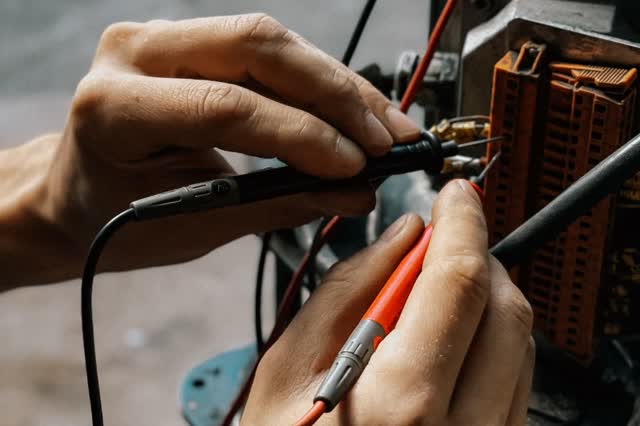
Oven temperature inaccurate (runs hot or cold)
First measure properly: ovens cycle above and below setpoint, so use an average over several cycles. Small offsets are fixed with the control's calibration setting; large errors usually mean a drifting sensor, a weak element or igniter, or a door gasket leak.
Guide · Range / OvenPro-style range or rangetop: burners click continuously (Wolf, Viking, Thermador)
On pro-style sealed burners the spark module sparks until it senses flame. Moisture, a mis-seated cap, a stuck knob switch, reversed polarity or a poor ground keep it sparking. Normal behaviors (ExtraLow re-ignition on Thermador, a spark or two after power-up) must be ruled out first. Gas-side work is never part of this guide.
Guide · Range / OvenRange tips forward / anti-tip bracket missing
Install the anti-tip bracket.
Guide · Range / OvenSelf-clean won't start or door won't lock
The control will not heat for self-clean until the lock switch confirms the door is locked. Check that the door closes fully, then whether the lock motor moves at all: no movement points to the motor or the control output; movement without confirmation points to the switch, latch binding or wiring.
Guide · Range / OvenWarming drawer not heating
Element, thermostat or control.