 5 components covered
Field manual · Fundamentals
Residential power for appliance work: 120 V, 240 V, receptacles and protection
Covers: US single-phase 120/240 V dwelling service as it relates to appliance installation and diagnosis
Many 'appliance' failures are really supply problems: an open leg, a 3-wire/4-wire mix-up, a tripping GFCI or a loose receptacle. This chapter explains what the appliance should be getting and how to check it at the outlet, and where the line is between appliance work and electrician work.
Safety first
- Panel work, circuit changes, new receptacles and breaker replacement are electrician work in most jurisdictions; refer them
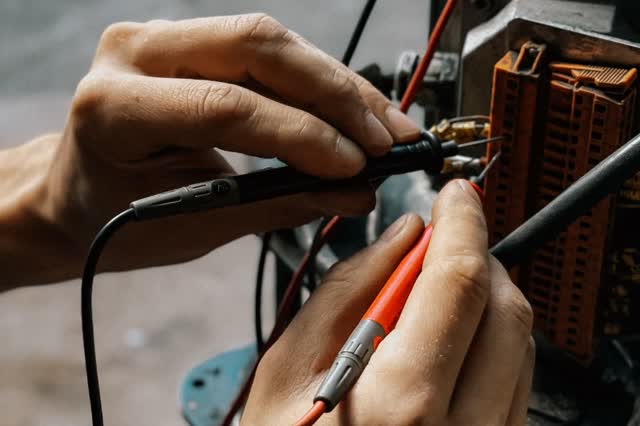
- Measuring at a live receptacle is a caution step: insulated probes, one hand, never bridge slots
- Never defeat a GFCI or remove a ground prong to stop nuisance trips
How it works
A US home is fed with two hot legs (L1, L2) and a neutral. Each leg to neutral is about 120 V; leg to leg is about 240 V. Most appliances use 120 V; electric dryers and ranges use 120/240 V, with heaters on 240 V and motors, timers, lights and controls on 120 V.
Dryer and range circuits come in two styles. A 4-wire circuit has L1, L2, neutral and a separate equipment ground; the appliance's neutral-to-frame bonding strap must be removed. A 3-wire circuit (L1, L2, neutral) is allowed only for existing installations under the code's exception, and uses the bonding strap. The 1996 NEC limited the 3-wire method to existing circuits; new circuits are 4-wire.
GFCI protection trips when current leaving on the hot does not return on the neutral (leakage to ground). Recent NEC editions extend GFCI to dwelling kitchen and laundry receptacles and to 125-250 V receptacles; the 2023 edition added specific appliances, but local adoption and amendments vary, so check the edition your jurisdiction uses.
AFCI protection trips on arcing signatures. Some motor-driven appliances can cause nuisance trips on older AFCI/GFCI devices; diagnose the appliance for leakage before blaming the breaker.
Dedicated circuits are commonly required by installation instructions for refrigerators, washers, dishwashers, disposers, microwaves and dryers. A shared or overloaded circuit causes nuisance trips and low voltage under load.
Components & tests
Unlock all 5 components, specs, service mode and teardown
Full library + AI assistant for $34.90, one time.
Get lifetime accessOfficial manufacturer documentation
Always confirm values against the tech sheet for the exact model.
OnCall Tech is a reference tool for trained technicians and can make mistakes. Always disconnect power and confirm with the manufacturer's documentation before you work. © 2026 OnCall Tech. Original content; not a reproduction of any manufacturer document.Generic part photos (not of this brand): Building facade with window and wall air conditioner units by Willian Santos, Pexels License