 8 components covered
Field manual · Fundamentals
Multimeter mastery for appliance techs: field reference
Covers: Digital multimeters (DMM) and clamp meters used on 120 V and 120/240 V residential appliances
The meter is the tech's main diagnostic tool. This reference covers each function an appliance tech uses (AC/DC volts, ohms, continuity, amps with a clamp, capacitance, temperature), what a good reading looks like, and the meter and lead safety ratings that keep you alive at the panel and the outlet.
Safety first
- Use a meter and leads rated for the highest measurement category you will touch
- Measure resistance, continuity and capacitance only on de-energized, verified-dead circuits
- Live voltage readings are caution steps: insulated probes, dry hands, stable footing, keep fingers behind the guards
- A non-contact tester is a screening tool; confirm 0 V with a meter before touching conductors
How it works
Voltage is measured in parallel (across two points) with the circuit live. Resistance, continuity and capacitance are measured with the circuit de-energized and, ideally, with the part isolated from the rest of the circuit so parallel paths don't skew the reading.
A resistance reading of OL means the path is open or the value is above the selected range. Continuity mode sends a small current and beeps when resistance is low; the beep threshold depends on the model (commonly somewhere in the 0-50 Ω band), so a beep is not proof of a perfect connection.
A clamp meter senses the magnetic field around one conductor. Clamping a whole cord (both hot and neutral) cancels the fields and reads near zero; you must clamp a single conductor or use a line splitter.
Capacitance must be measured on a discharged capacitor removed from the circuit. Many meters share the capacitance position with another function and need the function button pressed.
Measurement categories (CAT II, CAT III, CAT IV) describe how much transient energy the meter and leads can survive. Plug-in appliances and their receptacle loads are CAT II locations; panels, feeders and short branch circuits near the service are CAT III; the service entrance and meter base are CAT IV. Use a meter AND leads rated for the highest category you will touch.
Components & tests
Unlock all 8 components, specs, service mode and teardown
Full library + AI assistant for $34.90, one time.
Get lifetime accessOfficial manufacturer documentation
Always confirm values against the tech sheet for the exact model.
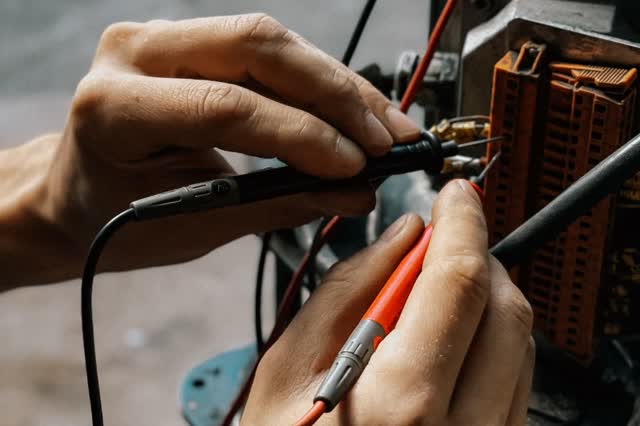
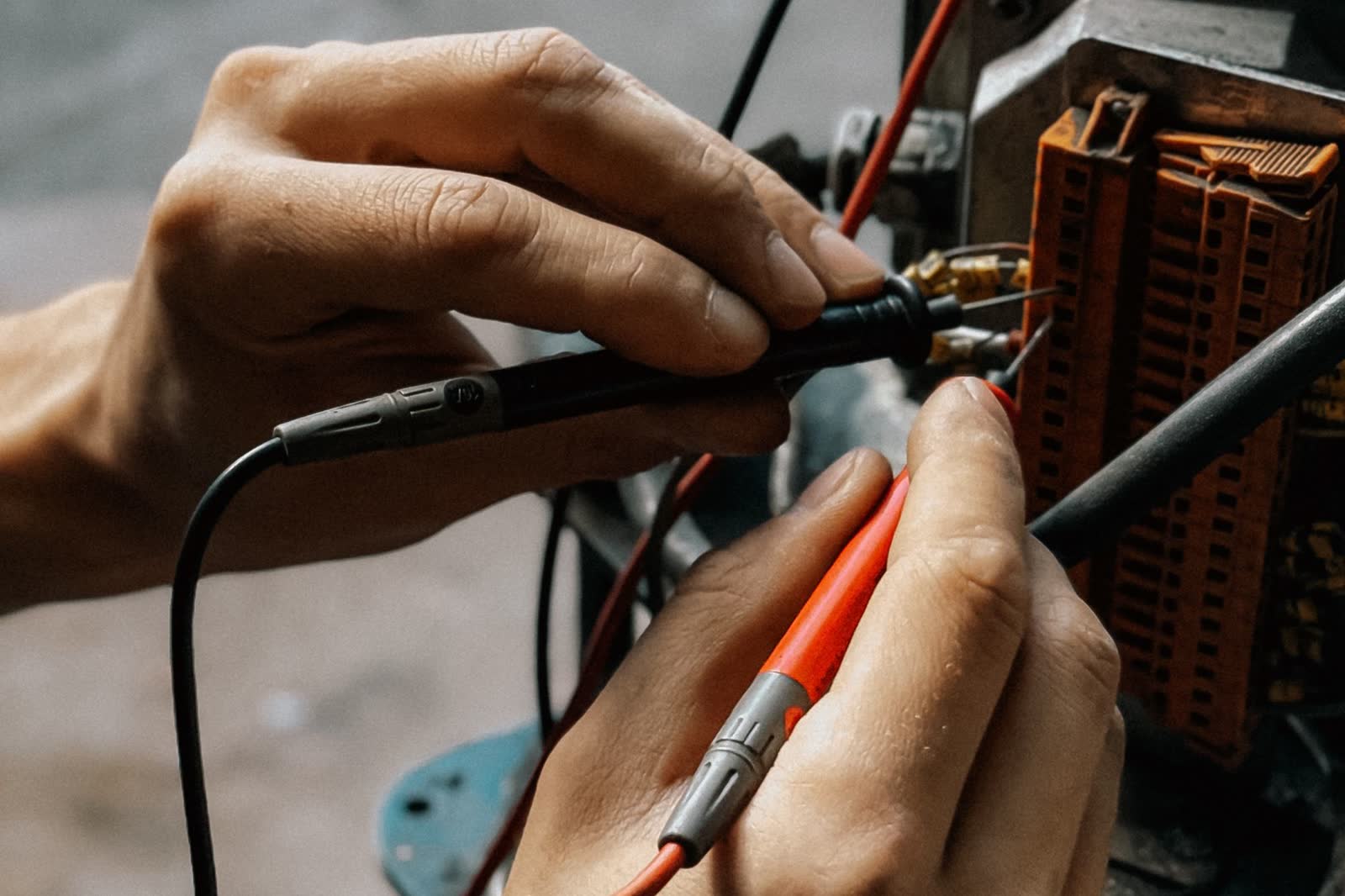
OnCall Tech is a reference tool for trained technicians and can make mistakes. Always disconnect power and confirm with the manufacturer's documentation before you work. © 2026 OnCall Tech. Original content; not a reproduction of any manufacturer document.Generic part photos (not of this brand): Hands holding multimeter probes on motor wiring terminals by Bulat843, Pexels License