 5 components covered
Field manual · Garage Door Opener
Wall-mount (jackshaft) garage door openers: field service manual
Covers: LiftMaster wall-mount operators: 3800, 8500, RJO20/RJO20C (Learn-LED codes) and 8500W/RJO70, 98022/RJO101, 98032, LJ8900W/LJ8950W (arrow codes). Own summary.
Instead of a ceiling rail, the operator mounts on the wall beside the door and turns the torsion bar directly through a collar. Used where ceilings are high, low or obstructed. It depends on a torsion-spring door in good balance.
Safety first
- The operator sits right next to the torsion spring and cable drums: never loosen set screws on spring cones or drums, never adjust cables. Refer to a trained door technician.
- Installation on these units is intended for trained door professionals.
How it works
The operator drives the torsion shaft; a collar with set screws locks it to the shaft.
Travel is tracked electronically; force is adjusted automatically on some models (codes 10/12 step force up after a reversal).
A cable tension monitor rides on a lift cable and stops the door if the cable goes slack.
Some models need a paired myQ remote light before unattended closing (app, schedules, Timer-to-Close) is allowed (code 5-5).
Safety-reversing sensors work the same as on trolley openers.
Components & tests
Unlock all 5 components, specs, service mode and teardown
Full library + AI assistant for $34.90, one time.
Get lifetime accessOfficial manufacturer documentation
Always confirm values against the tech sheet for the exact model.
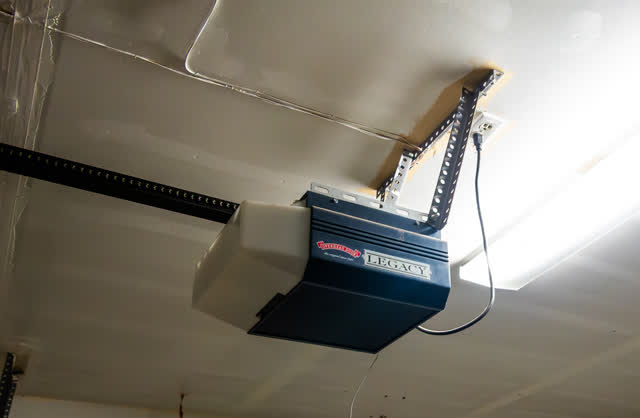
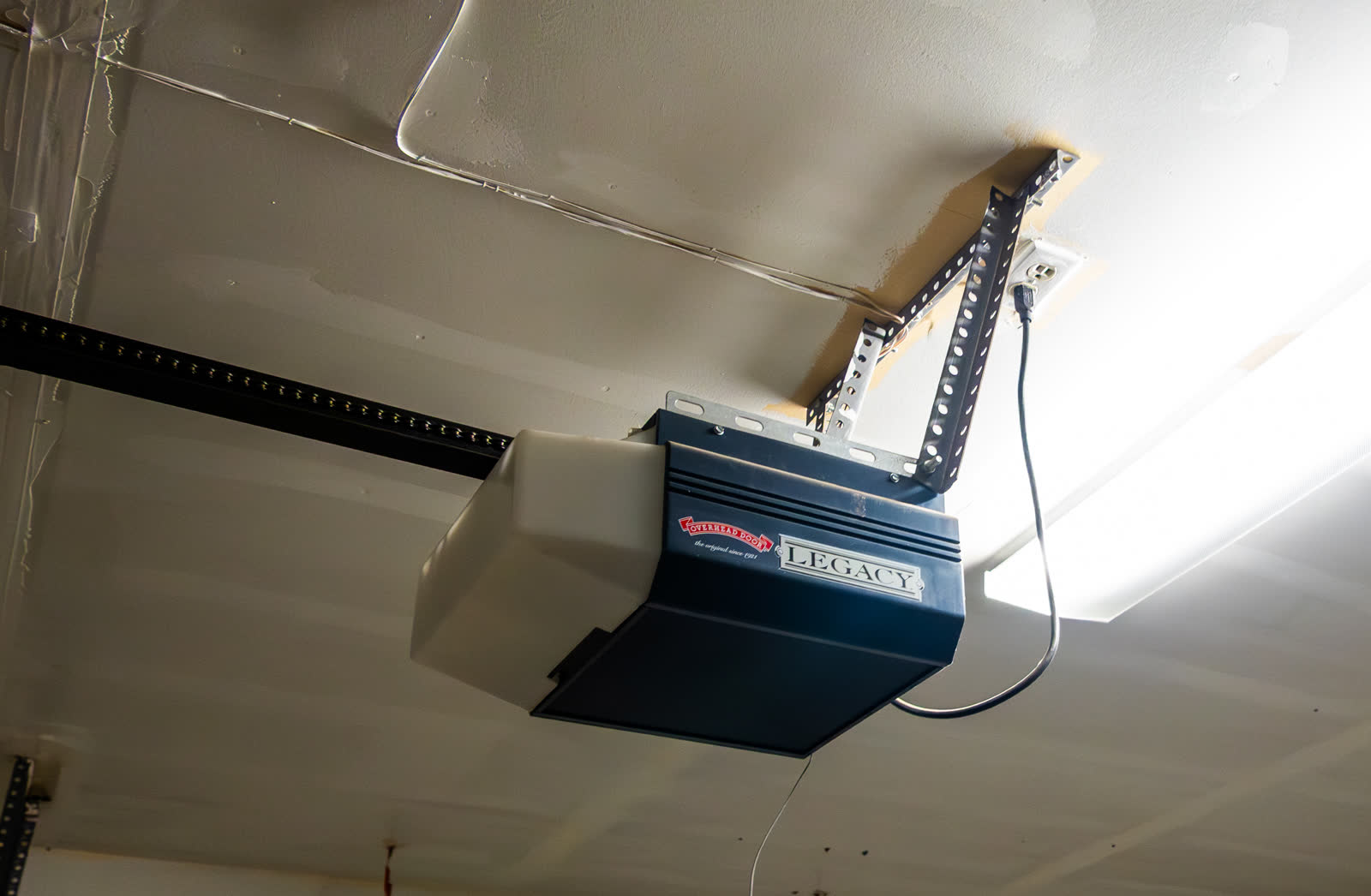
OnCall Tech is a reference tool for trained technicians and can make mistakes. Always disconnect power and confirm with the manufacturer's documentation before you work. © 2026 OnCall Tech. Original content; not a reproduction of any manufacturer document.Generic part photos (not of this brand): Ceiling-mounted garage door opener with its rail and power cord by Tony Webster, CC BY 4.0