 8 components covered
Field manual · Washer
Speed Queen top-load washer (TC5 classic and TR electronic): field service manual
Covers: Speed Queen residential top-loaders built by Alliance Laundry: the TC5 'classic' mechanical-control agitator washer (re-released around 2019) and the TR series (TR3/TR5/TR7) with electronic controls and a lid lock. Commercial-through-retail and coin models share many parts but use different controls and code sets.
Speed Queen top-loaders are heavy, commercial-style machines with a stainless wash basket and a porcelain outer tub. The TC5 is the old-school design: a two-speed 1/2 HP motor, a belt to a transmission, a separate agitator, mechanical controls and no lid lock, so the lid can be opened mid-cycle. The TR series uses a 1 HP variable-speed motor, spins faster (about 820 rpm vs about 710 rpm on the TC5), locks the lid and moves agitator and basket together for a gentler wash. Expect techs to be called mostly for lid switch/lock, belt and drain issues; the cabinet hides a wiring/tech sheet.
Safety first
- Unplug before opening the cabinet or console.
- Turn off both water valves before working on hoses or the inlet valve.
- Keep hands clear of the basket during any spin test; the TC5 has no lid lock.
- Get help tilting the machine; Speed Queens are heavy.
How it works
TC5 (mechanical): the cycle selector and water-level selector drive the sequence. The motor runs in two speeds and turns a transmission through a heavy belt; the transmission oscillates the agitator for wash and locks the basket for spin. There is no lid lock, only a lid switch that cuts spin when the lid is raised.
TC5 fill: the operator picks the water level on a variable selector; a level switch on an air-dome hose ends the fill. Deep-fill and extra-rinse options lengthen the fill and rinse steps.
TR series (electronic): a control board drives a 1 HP variable-speed motor. The lid locks for the cycle, and on these models agitator and basket move as one assembly during wash, producing a tumbling action rather than a pushed-down action. Auto-fill load settings let the control choose the level.
Spin: both families spin the basket after the pump drains the tub; the TC5 tops out around 710 rpm and the TR around 820 rpm. An automatic balancing system reduces off-balance shutdowns but overloaded or one-sided loads still stop spin.
Diagnostics: the TC5 has no display or stored codes; you diagnose by watching each stage (fill, agitate, drain, spin). Electronic TR models show codes and have a factory test mode; procedures differ by control generation, so use the sheet inside the cabinet.
Components & tests
Unlock all 8 components, specs, service mode and teardown
Full library + AI assistant for $34.90, one time.
Get lifetime accessOfficial manufacturer documentation
Always confirm values against the tech sheet for the exact model.
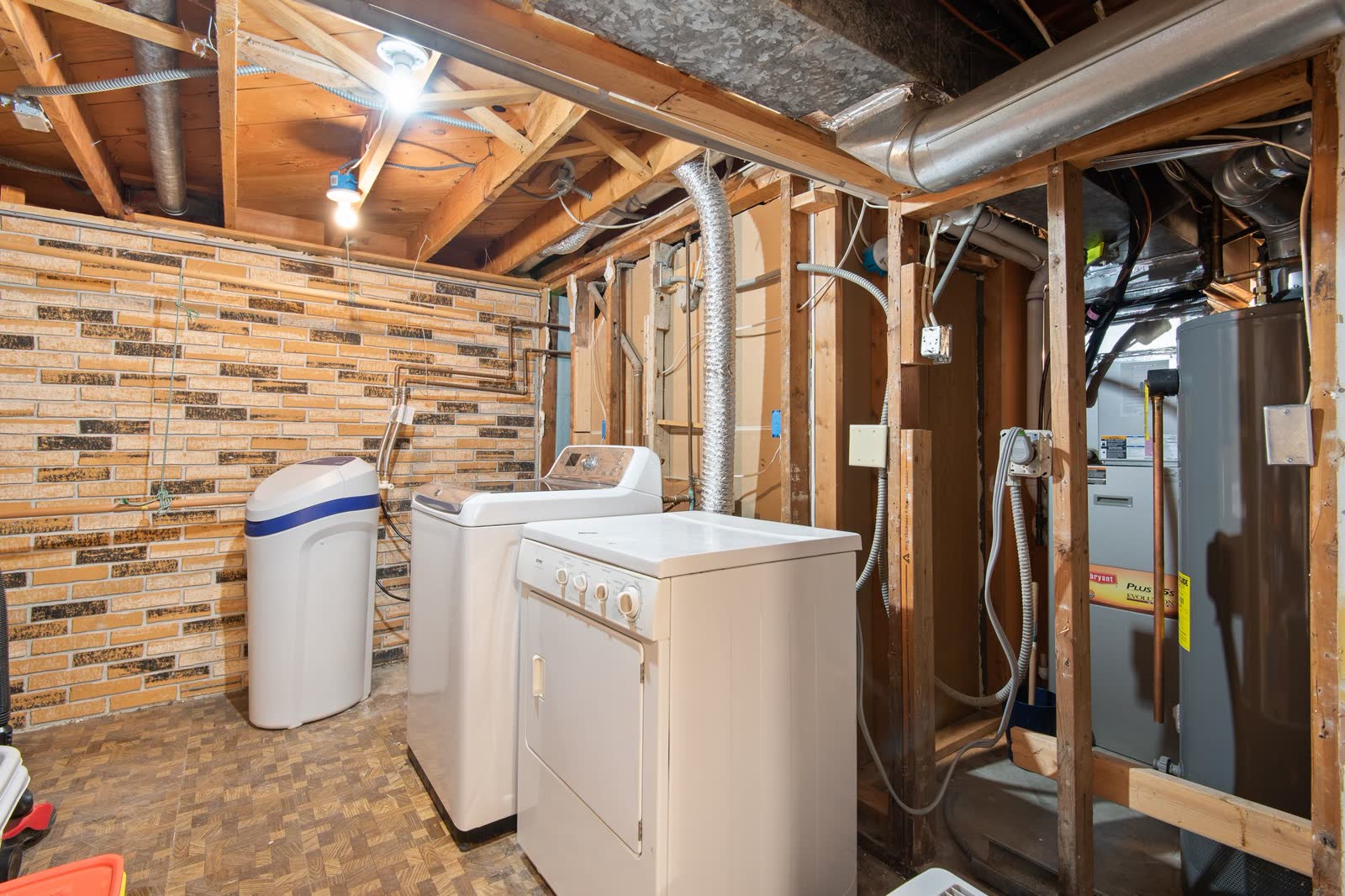
OnCall Tech is a reference tool for trained technicians and can make mistakes. Always disconnect power and confirm with the manufacturer's documentation before you work. © 2026 OnCall Tech. Original content; not a reproduction of any manufacturer document.Generic part photos (not of this brand): Basement laundry area with a top-load washer and dryer next to utility equipment by Đỗ Huy Hoàng, Pexels License