 7 components covered
Field manual · Range / Oven
Gas range (all brands): electrical-side field service manual
Covers: Freestanding and slide-in gas ranges and gas wall ovens, all major US brands. Covers only the electrical side: igniters, spark system, oven sensor, controls, lights and fans. All gas-carrying parts are out of scope.
A gas range runs on a 120 V household outlet that powers the clock/control, the oven igniter, the surface spark module, lights and fans. Most 'no flame' calls on the oven are a weak glow-bar igniter; most surface complaints are a spark switch, a wet or dirty electrode, or the spark module. Gas valves, the safety valve body, regulator, orifices, LP/NG conversion and supply lines are blocked: refer to a licensed gas technician.
Safety first
- GAS SMELL: do not operate switches, lights or phones near the range; do not light anything; shut the gas off only if it is safe to reach; ventilate, leave the building and call the gas utility or 911 from outside
- Gas valves, safety valve body, regulator, orifices, LP/NG conversion and gas lines are BLOCKED: refer to a licensed gas technician
- Unplug the range before touching igniter, spark or control wiring; the spark module output is high voltage
- Igniter current checks run with the igniter hot and live: trained techs only, keep hands clear of the burner
- Continuous sparking near an open burner can ignite leaking gas: unplug immediately if clicking will not stop
How it works
Surface burners: each burner valve has a small spark switch on its stem. Turning any knob to LITE closes its switch, which feeds 120 V to the spark module; the module then fires all electrodes at once (so every burner clicks). The flame lights from the electrode sitting in the burner's ignition port.
Many oven bake and broil burners use a glow-bar (hot surface) igniter wired in series with a bimetal oven safety valve. The valve only opens when the igniter is hot enough to pass enough current, so an aged igniter can glow orange yet never pass enough current to open the valve.
Other ovens use direct spark ignition (DSI): a module sparks the bake/broil electrode and uses the same electrode to sense flame by flame rectification. If it loses the flame signal it re-sparks or shuts down. These systems need a solid ground and correct polarity.
Electronic oven controls read an RTD oven sensor (about 1,080-1,100 ohms at room temperature) and switch the igniter circuit on and off to cycle the burner around setpoint.
Self-clean gas ovens add a motorized door lock and often a cooling fan; convection models add a fan (and on some, a small electric convection element).
Components & tests
Unlock all 7 components, specs, service mode and teardown
Full library + AI assistant for $34.90, one time.
Get lifetime accessOfficial manufacturer documentation
Always confirm values against the tech sheet for the exact model.
- Whirlpool product help (ranges and wall ovens)
- Whirlpool manuals and literature search
- GE Appliances service and support
- Samsung US home appliance support
- Samsung range/wall oven error codes (Canada support page)
- LG US error codes for cooktops and ranges
- LG US support and manuals
- Frigidaire owner center (support and manuals)
- Bosch Home US get support (manuals, service)
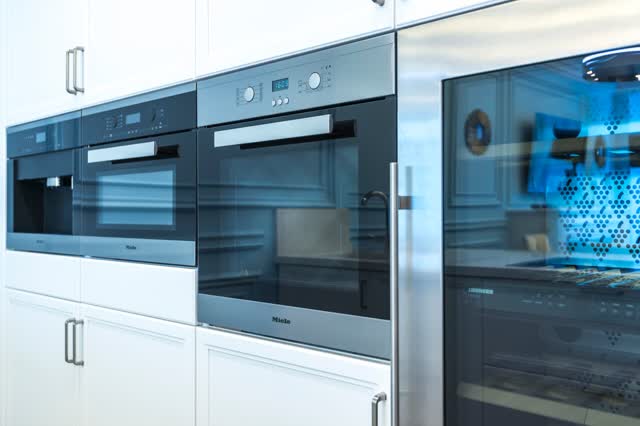
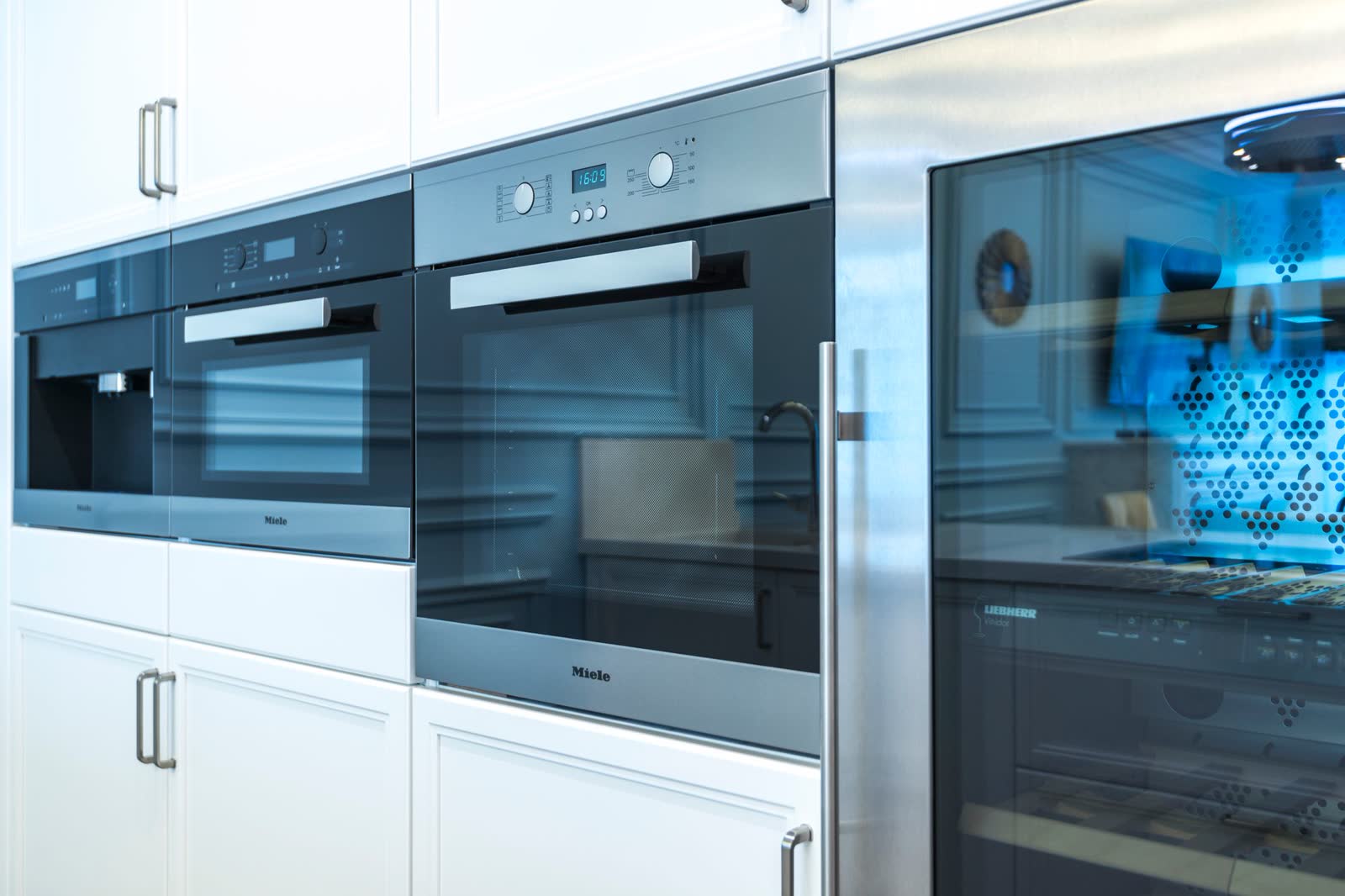
OnCall Tech is a reference tool for trained technicians and can make mistakes. Always disconnect power and confirm with the manufacturer's documentation before you work. © 2026 OnCall Tech. Original content; not a reproduction of any manufacturer document.Generic part photos (not of this brand): Row of built-in wall ovens in a modern kitchen by Max Vakhtbovych, Pexels License