 8 components covered
Field manual · Air Conditioner
Ductless mini-split heat pump / AC: field service manual
Covers: Single- and multi-zone inverter ductless systems with wall-mount, ceiling cassette or slim-ducted indoor units. Code meanings are in the air-conditioner error code list; this manual covers concepts and safe electrical checks.
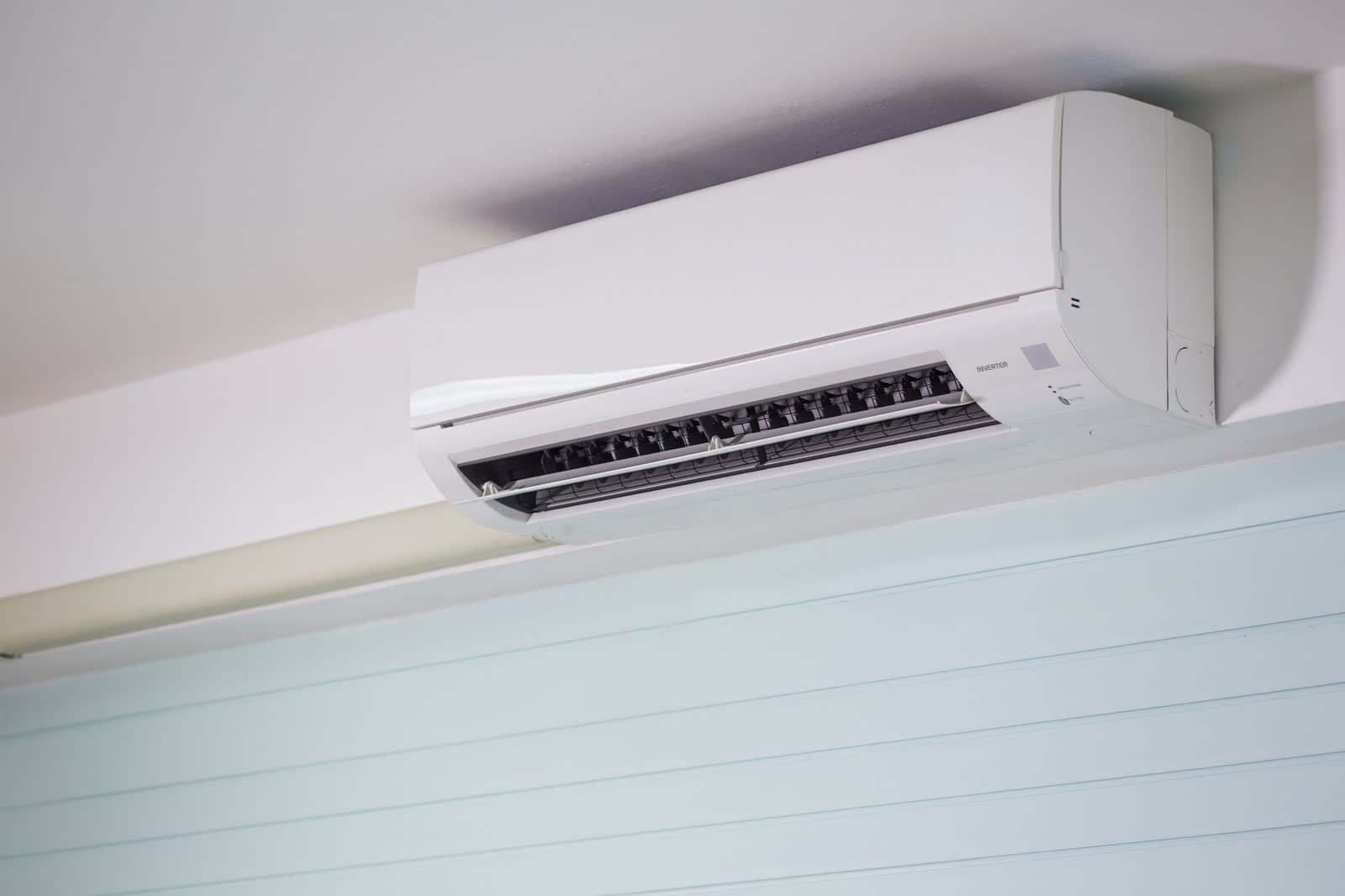
A mini-split pairs an outdoor inverter condensing unit with one or more indoor heads, joined by a refrigerant line set, a drain line and a power/communication cable. The outdoor board varies compressor speed instead of cycling it, and the indoor and outdoor boards talk to each other constantly. Most service calls are drain, airflow, sensor and communication problems, all of which are outside the sealed system.
Safety first
- Switch off both the breaker and the outdoor disconnect; the indoor head may be fed from the outdoor unit.
- Inverter boards store lethal DC voltage after power-off: verify near 0 V DC before touching.
- Interconnect wiring on many systems carries line voltage, not low voltage.
- Refrigerant work (gauges, flare repair, line-set connections, recharge, compressor or valve replacement) requires EPA Section 608 certification. Diagnose and refer only.
How it works
Inverter concept: the outdoor board rectifies incoming AC to a high DC bus, then synthesizes variable-frequency power for the compressor (and often a DC fan motor). The compressor ramps up on a big load and slows down near setpoint rather than stopping.
Communication: indoor and outdoor boards exchange data over the interconnect cable. On the common 3-wire layout (often S1/S2/S3 or 1/2/3), two wires carry power and the third carries a data signal referenced to one of them. A healthy data line typically reads as a fluctuating DC voltage on a meter; a steady or missing signal points to wiring or a board. Exact values differ by brand: use the service manual.
Sensors: each indoor head has at least a room/return-air thermistor and a coil thermistor; the outdoor unit adds ambient, coil, discharge and sometimes suction sensors. Midea-platform brands (MrCool, Pioneer, some Carrier) label them T1 room, T2 indoor coil, T3 outdoor coil, T4 outdoor ambient, T5 discharge. Mitsubishi calls them TH1, TH2 and so on.
Error display: faults appear as a code on the wired controller or display, or as blink counts on the Operation/Timer LEDs. Count and record the blinks before resetting power, because a breaker reset clears the active code.
Condensate: wall heads drain by gravity through a line that must fall continuously; cassettes and ducted units, and wall heads that cannot drain downhill, use a condensate pump with a float that stops the system if water backs up.
Heat pump models reverse the refrigerant flow for heating and defrost the outdoor coil periodically; during defrost the indoor fan stops or runs very slowly and the outdoor unit may steam. That is normal.
Components & tests
Unlock all 8 components, specs, service mode and teardown
Full library + AI assistant for $34.90, one time.
Get lifetime accessOfficial manufacturer documentation
Always confirm values against the tech sheet for the exact model.
OnCall Tech is a reference tool for trained technicians and can make mistakes. Always disconnect power and confirm with the manufacturer's documentation before you work. © 2026 OnCall Tech. Original content; not a reproduction of any manufacturer document.Generic part photos (not of this brand): Ductless mini-split indoor head mounted high on a wall by NEOSiAM, Pexels License