 8 components covered
Field manual · Fundamentals
Water supply and drain requirements for appliances: pressure, temperature, hoses, air gaps and standpipes
Covers: Washers, dishwashers, refrigerators/ice makers and similar water-connected appliances in US homes; manufacturer install sheet ranges plus summarized IRC/UPC rules. Plumbing codes are adopted and amended locally
Water-side problems cause a large share of 'appliance' callbacks: slow fill from low pressure, siphoning from a drain hose pushed too far into a standpipe, overflowing standpipes, cold-water dishwashing and burst rubber hoses. This reference collects the ranges manufacturers publish and the code concepts behind them so you can check the house side before blaming the machine.
Safety first
- Shut off water before disconnecting hoses; keep towels and a pan ready
- PRV, expansion tank, drain line and air gap installation are plumbing work in many jurisdictions; refer
- Check your local plumbing code and AHJ; IRC, UPC and local amendments differ
How it works
Inlet valves are designed for a pressure window. Manufacturer sheets commonly list 20-120 psi for dishwashers and 20-100 psi for many washers. Below the window, fills are slow and timing codes appear; above it, valves and hoses are stressed.
Plumbing codes cap static house pressure at 80 psi; above that, a pressure-reducing valve is required at the service. A closed system with a PRV also needs thermal-expansion control at the water heater.
Dishwashers want hot water at about 120°F at the unit. DOE also recommends 120°F as the water heater setting for most homes, so a long pipe run that delivers cold water first is a common cause of poor cleaning.
Drains must not siphon or back up. Washer drain hoses go into a standpipe (often 2 in minimum diameter) or laundry tub; the hose end is secured but not sealed into the pipe. Dishwasher drains use a high loop under the counter (accepted by the IRC) or an air gap fitting (required under the UPC and some local codes).
Standpipe height matters both ways: too low and the washer can siphon or overflow; too high and the pump cannot lift the water. The IRC range is measured above the trap weir; manufacturer sheets give their own minimum and maximum heights above the washer base.
Components & tests
Unlock all 8 components, specs, service mode and teardown
Full library + AI assistant for $34.90, one time.
Get lifetime accessOfficial manufacturer documentation
Always confirm values against the tech sheet for the exact model.
- CPSC recalls search
- SaferProducts.gov recall and incident search
- Whirlpool Corporation recall information
- GE Appliances recalls
- Frigidaire recall information
- Water heater and boiler recall lookup (A. O. Smith / Lochinvar)
- EPA Section 608 technician certification types
- OSHA control of hazardous energy (lockout/tagout)
- CPSC carbon monoxide information center
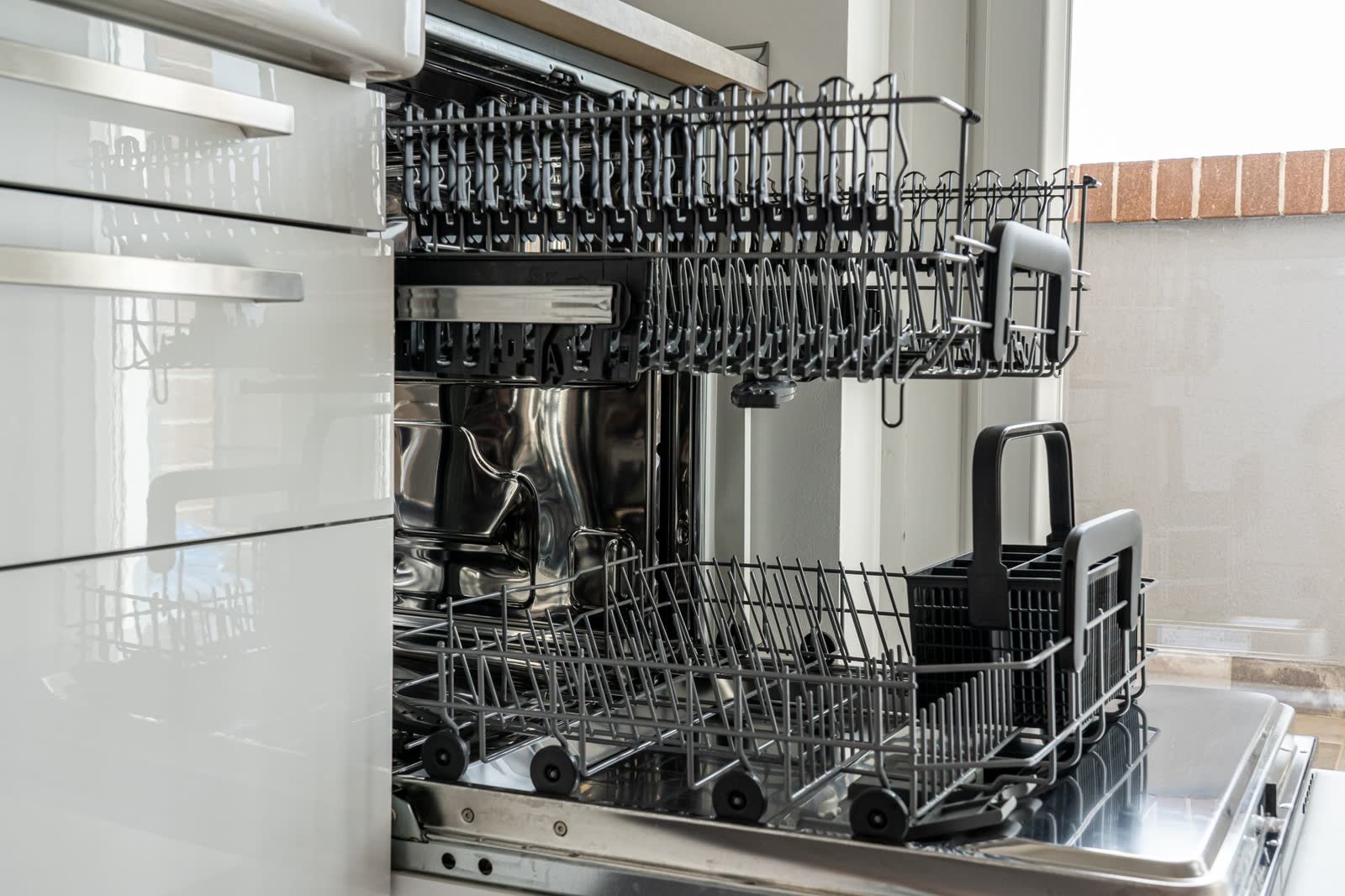
OnCall Tech is a reference tool for trained technicians and can make mistakes. Always disconnect power and confirm with the manufacturer's documentation before you work. © 2026 OnCall Tech. Original content; not a reproduction of any manufacturer document.Generic part photos (not of this brand): Built-in dishwasher with the door open and racks pulled out by Castorly Stock, Pexels License