 9 components covered
Field manual · Fundamentals
Appliance sensors reference: NTC, PTC, RTD, Hall, reed, flow, pressure, turbidity and moisture
Covers: Sensor types found across modern appliances and how each should be tested. Generic behaviour only; use the model's chart for values.
A board is only as good as what its sensors tell it. Each sensor family has its own correct test: some are measured cold for resistance, some must be powered and read as a voltage or frequency, and some can only be judged by the board's own diagnostic readout. Using an ohmmeter on a powered three-wire sensor, or a chart from the wrong family, is the most common sensor misdiagnosis.
Safety first
- Most sensor checks are low voltage, but the sensor connector is often on a board that also carries line voltage. Probe carefully or unplug the appliance and test at the harness.
- Unplug before disconnecting sensors to avoid false codes and board damage.
How it works
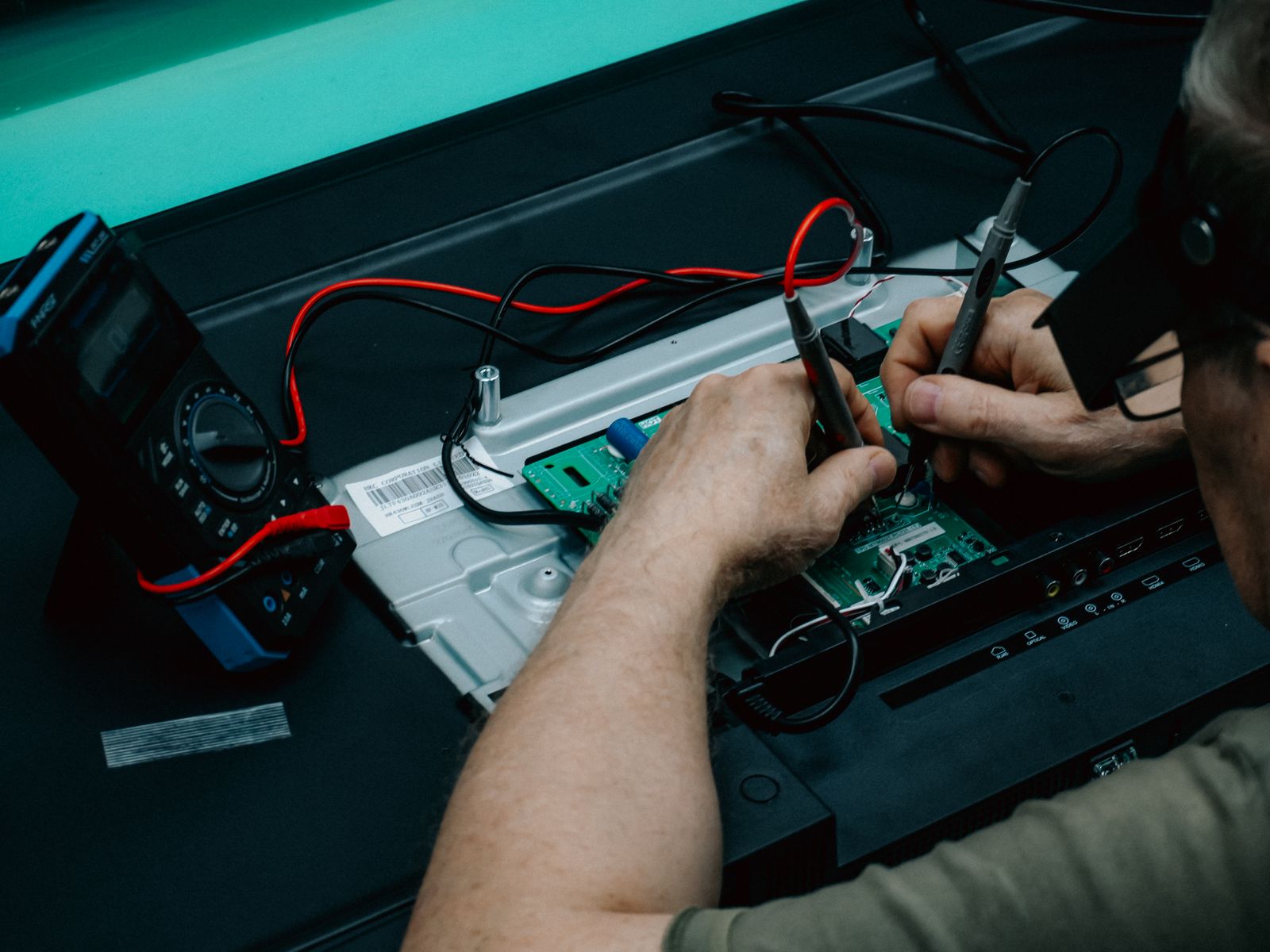
Passive two-wire sensors (NTC thermistors, RTDs, reed switches, dryer moisture bars) are read by the board as a resistance. They can be tested unpowered with an ohmmeter at a known condition.
Active three-wire sensors (Hall-effect switches, flow meters, many pressure sensors, turbidity sensors) have electronics inside. The board feeds them a DC supply (commonly 5 V) and ground, and reads a signal wire. They are tested powered: supply, ground, then signal.
Some sensors output a frequency instead of a voltage. Several washer water-level sensors work this way: the frequency changes with the air pressure in the tub. A plain ohmmeter cannot judge them; the board's service mode or a meter with a frequency function is needed.
The board compares a reading with its expected range. A reading outside the range (open, shorted, or stuck) sets a code. A reading inside the range but wrong (drifted sensor) gives no code, just bad behaviour, so a measured comparison against a known condition matters.
Components & tests
Unlock all 9 components, specs, service mode and teardown
Full library + AI assistant + the OnCall Tech app for iPhone & Android. $34.90, one time.
Get lifetime accessOfficial manufacturer documentation
Always confirm values against the tech sheet for the exact model.
- CPSC recalls search
- SaferProducts.gov recall and incident search
- Whirlpool Corporation recall information
- GE Appliances recalls
- Frigidaire recall information
- Water heater and boiler recall lookup (A. O. Smith / Lochinvar)
- EPA Section 608 technician certification types
- OSHA control of hazardous energy (lockout/tagout)
- CPSC carbon monoxide information center
OnCall Tech is a reference tool for trained technicians and can make mistakes. Always disconnect power and confirm with the manufacturer's documentation before you work. © 2026 OnCall Tech. Original content; not a reproduction of any manufacturer document.