Repair guides
Pick a type, an appliance or a brand. Every guide lists the tools, the safety call-outs, the steps and the reading you should expect.
Diagnostic · 374
Symptom → most likely cause, step by step
Component tests · 69
How to test a specific part, with expected readings
Installation · 33
Install, replace and hook up appliances correctly
Fundamentals · 24
Core skills every appliance tech uses
Appliance
Brand-specific guides
3 guides · Dishwashers
Installation · 3
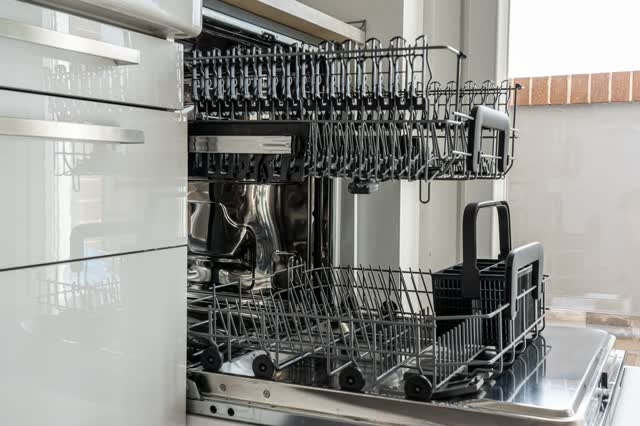 Install · Dishwasher
Dishwasher electrical: hardwired whip vs plug-in cord kit
Dishwashers arrive either set up for a hardwired connection at their own junction box or for a cord kit, and the model instructions say which is allowed. Hardwiring and any change to the circuit are electrical work and may need a licensed electrician and permit. The handyman scope is usually reconnecting an existing, code-compliant circuit the same way it was.
 Install · Dishwasher
Dishwasher install: water, drain loop or air gap, power and mounting
A built-in dishwasher needs four things done right: a hot-water supply with its own shutoff, a drain that cannot siphon back (high loop or air gap, as local code requires), the correct electrical connection for that model, and secure mounting to the counter or cabinet sides. Most callbacks come from a kinked drain hose, a skipped high loop, or a unit that was never anchored.
Install · DishwasherDishwasher replacement: swapping an old unit (disposal knockout, reused connections)
A swap is faster than a new install but hides traps: old supply lines and fittings that should be replaced, a disposal inlet that still has its knockout plug if the disposal is also new, and an old drain path with no high loop. Treat every connection as new.