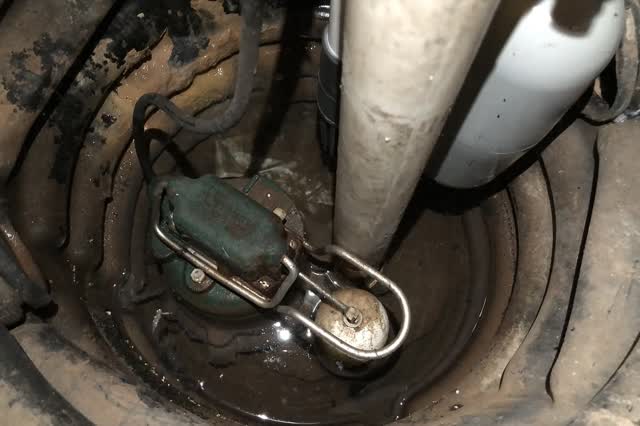
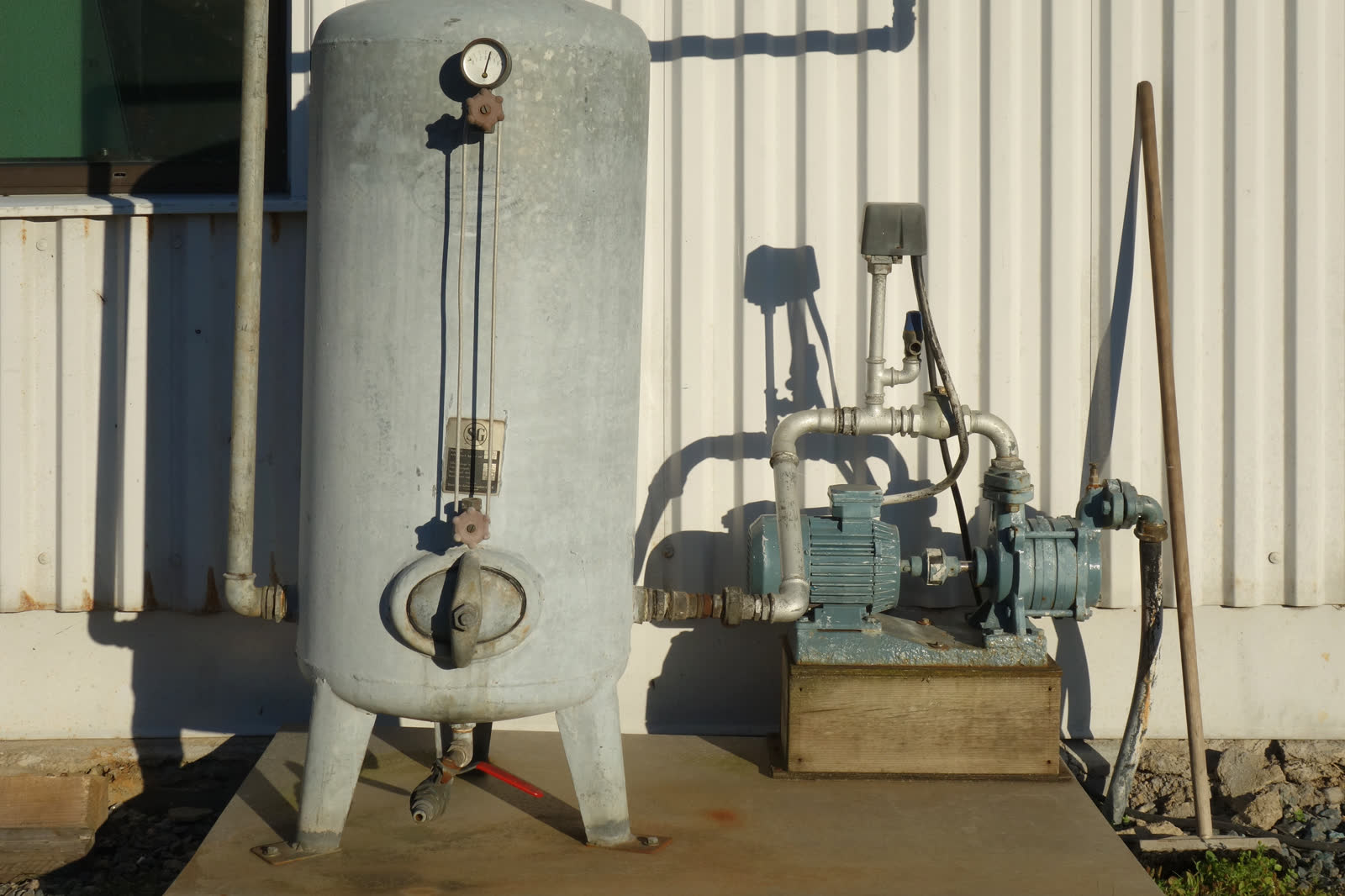
 4 components covered
Field manual · Sump / Well Pump
Residential well pump systems: field service manual
Covers: Private-well systems with submersible or jet pumps, captive-air pressure tanks, mechanical pressure switches and constant-pressure drives (e.g. Franklin SubDrive/MonoDrive)
A well pump fills a pressure tank until a pressure switch (or a drive with a transducer) says stop. The tank's air cushion lets the house draw water without restarting the pump every few seconds. Most service calls are tank precharge, pressure switch and electrical issues; anything downhole goes to a licensed well contractor.
Safety first
- 240 V and high current: breaker off and verify dead before opening switches or drives
- System under pressure up to about 80 psi: drain before opening plumbing
- Pulling a submersible pump requires a licensed well contractor
How it works
Submersible pumps sit down in the well casing; jet pumps sit above ground and pull water up, and must stay primed.
A conventional pressure switch starts the pump at the cut-in pressure and stops it at cut-out (common ranges like 30/50 or 40/60).
The captive-air tank has a bladder or diaphragm with an air precharge. Correct precharge is set with the system drained, slightly below cut-in.
Constant-pressure drives vary motor speed to hold a setpoint and report faults on a display (Franklin F-codes).
Components & tests
Unlock all 4 components, specs, service mode and teardown
Full library + AI assistant for $34.90, one time.
Get lifetime accessOfficial manufacturer documentation
Always confirm values against the tech sheet for the exact model.
OnCall Tech is a reference tool for trained technicians and can make mistakes. Always disconnect power and confirm with the manufacturer's documentation before you work. © 2026 OnCall Tech. Original content; not a reproduction of any manufacturer document.Generic part photos (not of this brand): Vertical pressure tank connected to a water pump outdoors by W.carter, CC BY-SA 4.0