 9 components covered
Field manual · Water Heater
Navien NCB-E and NCB-H condensing combi boilers (NCB-150E to NCB-240E, NCB-190/060H to NCB-250/150H): quick sheet (electrical and diagnostic side)
Covers: Navien NCB-E combi boilers: NCB-150E, NCB-180E, NCB-210E, NCB-240E. Navien NCB-H combi boilers: NCB-190/060H, NCB-190/080H, NCB-240/110H, NCB-240/130H, NCB-250/150H (first number = DHW size class, second = heating input in MBH). Search terms: Navien combi, NCB240E, NCB-240E, NCB 210E, NCB-H, Navien combi low pressure, Navien combi no hot water. The newer NCB700 series and the older CH-series combis are different platforms. Note: there is no plain 'NCB-190H' or 'NCB-250H'; the H models always carry two numbers.
Wall-hung condensing boilers that heat the house and make on-demand domestic hot water (DHW) from one burner. Both lines have dual stainless primary/secondary heat exchangers, a stainless plate heat exchanger for DHW, an internal circulator, a built-in water feeder connection, and a display that alternates heating supply temperature and system pressure. The H models add three zone pump and three zone valve powered outputs and a 3-way valve in the DHW module. This sheet covers what a technician can check on the electrical and water side; gas valve, burner, combustion and vent work are blocked, and heating-system pressurization beyond reading the gauge goes to a licensed heating pro if in doubt.
Safety first
- Gas valve, burner, gas pressure, combustion and venting are blocked: refer to a licensed gas technician. Gas odor: leave and call the utility.
- 120 V AC inside the cabinet: disconnect power before opening.
- Hot water and pressurized boiler water can scald: let the system cool before opening any fitting.
- Do not cap, plug or adjust the 30 PSI heating relief valve or 150 PSI DHW relief valve. Expansion tank and pressurization work beyond reading the gauge goes to a licensed heating pro if uncertain.
- DHW above 125 F can scald (Navien note).
How it works
DHW has priority. When a hot tap opens above the minimum DHW flow (0.5 GPM), the board stops space heating, the internal pump and diverting valve send boiler water through the plate heat exchanger, and the burner modulates to hold DHW set point (86-140 F). When the draw ends, space heating resumes. A long shower can let the house cool a few degrees; Navien says this is normal.
For space heating, the board fires to a supply temperature target (NCB-E range about 77-194 F; NCB-H 77-185 F supply) and, with the included outdoor reset sensor (NCB-E), lowers the target in mild weather. The H models can drive up to three zone pumps or three zone valves directly from the boiler.
Safety inputs the board watches: flame rod, air pressure sensing (APS), gas valve operation detector, ignition operation detector, water high-limit switch, exhaust high-limit sensor and a water pressure sensor. The boiler-side pressure shows on the display and should sit inside 12-30 PSI; the factory relief valve on the heating supply is 30 PSI. Low pressure locks out both heating and DHW, which is why a 'no hot water' call on a combi is often really a heating-loop pressure problem.
Flue gas condenses in the secondary heat exchanger; condensate leaves through a 1/2 in NPT outlet and should pass through a neutralizer. Venting is forced-draft direct vent (2 in or 3 in PVC, CPVC, approved PP or BH special gas vent).
Components & tests
Unlock all 9 components, specs, service mode and teardown
Full library + AI assistant + the OnCall Tech app for iPhone & Android. $34.90, one time.
Get lifetime accessOfficial manufacturer documentation
Always confirm values against the tech sheet for the exact model.
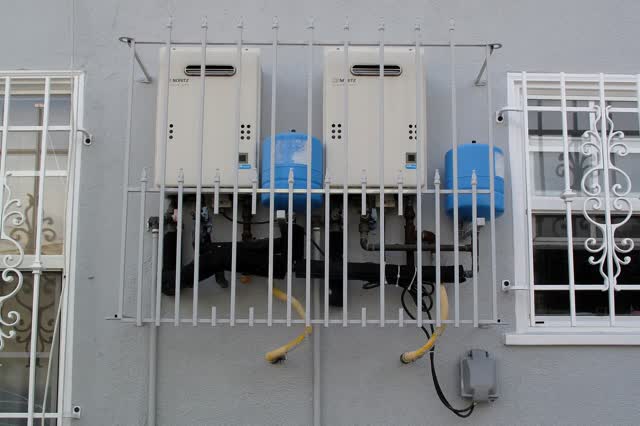
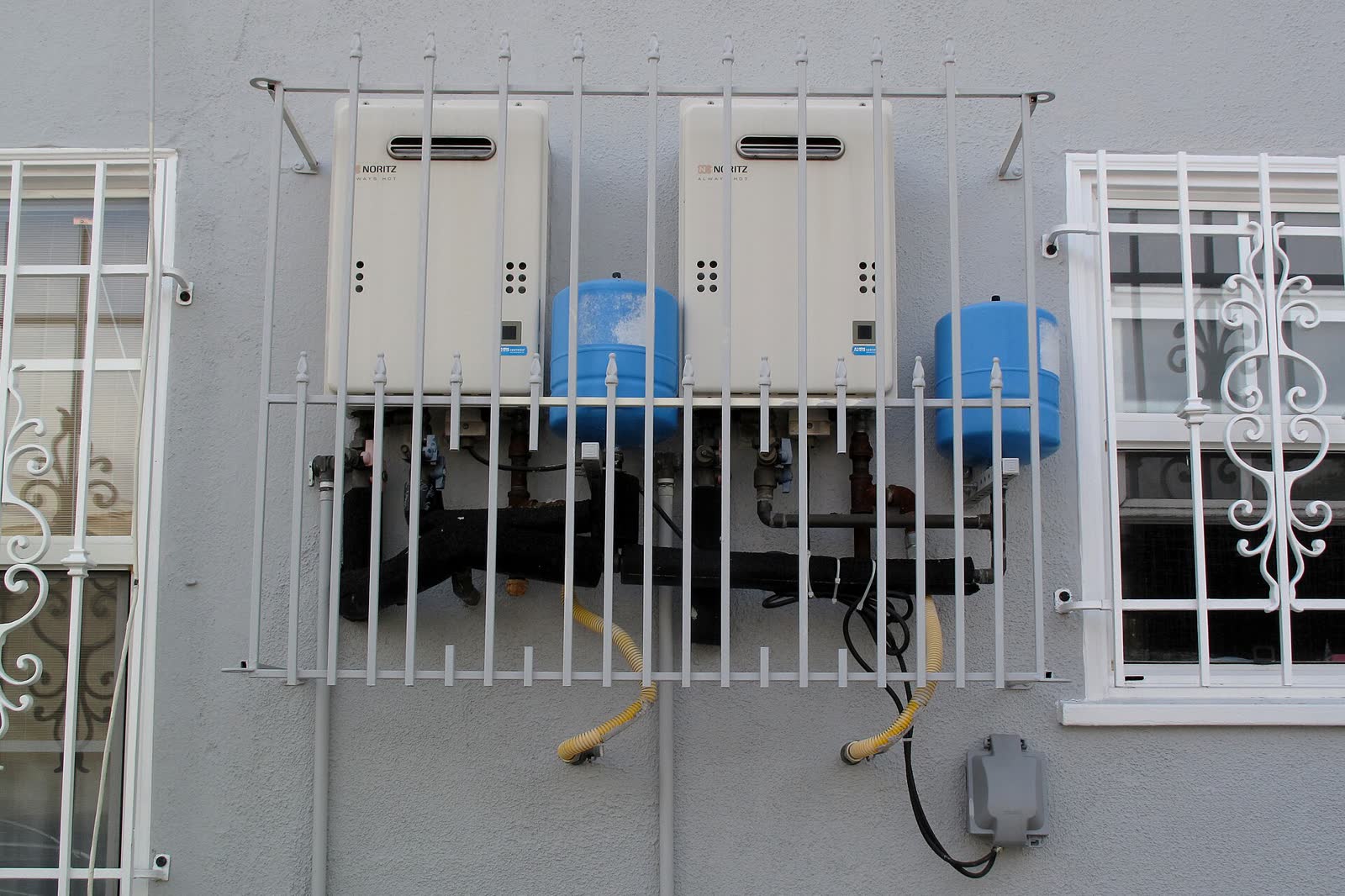
OnCall Tech is a reference tool for trained technicians and can make mistakes. Always disconnect power and confirm with the manufacturer's documentation before you work. © 2026 OnCall Tech. Original content; not a reproduction of any manufacturer document.Generic part photos (not of this brand): Two wall-mounted tankless water heaters with expansion tanks on an exterior wall by Downtowngal, CC BY-SA 4.0