 9 components covered
Field manual · Water Heater
Rinnai V-series non-condensing tankless (V53DeN, V65, V75, V94): quick sheet
Covers: Rinnai Value (V) series non-condensing gas tankless heaters: V53DeN (outdoor), V65eN/V65iN, V75eN/V75iN, V94eN/V94iN and their propane (P) versions. Water side, electrical side and diagnostics only; gas, burner and venting are referral items.
The V-series is Rinnai's entry non-condensing line: a single copper heat exchanger, no condensate trap, and a built-in temperature controller on indoor models. Model numbers read as max flow (53 = 5.3 gpm, 65 = 6.5, 75 = 7.5, 94 = 9.8 gpm on the V94iN), then e = outdoor or i = indoor, then N or P for gas type. Most field calls are a clogged inlet filter, scale (LC code), low flow that will not fire the burner, or freeze damage on outdoor units after a power outage.
Safety first
- GAS: burner, gas valve, gas pressure and venting repairs are blocked; refer to a licensed plumber or gas technician. If you smell gas, leave and call the gas utility
- Unplug the unit before opening the cabinet; the board and frost heaters run on 120 V
- Outlet water and heat exchanger can be scalding right after use
- Do not reduce the vent diameter or alter venting; indoor models use only Rinnai-listed vent components
How it works
When a hot tap opens, cold water passes the inlet filter and a turbine-type water flow sensor. Once flow reaches the activation threshold (Rinnai lists about 0.4 gpm for the V65e/V75i) the board starts the combustion fan, proves airflow, ignites the burner and proves flame with the flame rod. Below the threshold the unit simply does not fire, which is the most common 'no hot water at the bathroom sink' complaint.
The board modulates gas input (roughly 10,300 to 150,000-199,000 BTU/h depending on model) to hold the outlet temperature. It reads an inlet thermistor and an outlet thermistor and uses an electronic water control device plus a fixed bypass to blend and limit flow when incoming water is very cold, so the set temperature can still be reached.
Out of the box the unit is set to deliver 120°F to reduce scald risk; higher settings (typically up to 140°F on residential controls) are available through the controller or parameter settings, and commercial controllers are needed for anything hotter on models that support it. Check the model's manual before raising it.
Built-in safeties include flame failure detection, boiling (overheat) protection with a thermal fuse/bi-metal on the heat exchanger, a combustion fan RPM check and automatic frost protection. Frost protection uses small electric heaters and, when needed, the burner, so it only works while the unit has 120 V power and gas. Rinnai rates indoor models to about -22°F (-30°C) and outdoor models to about -4°F (-20°C) when shielded from wind; exposed external piping is not protected.
Components & tests
Unlock all 9 components, specs, service mode and teardown
Full library + AI assistant for $34.90, one time.
Get lifetime accessOfficial manufacturer documentation
Always confirm values against the tech sheet for the exact model.
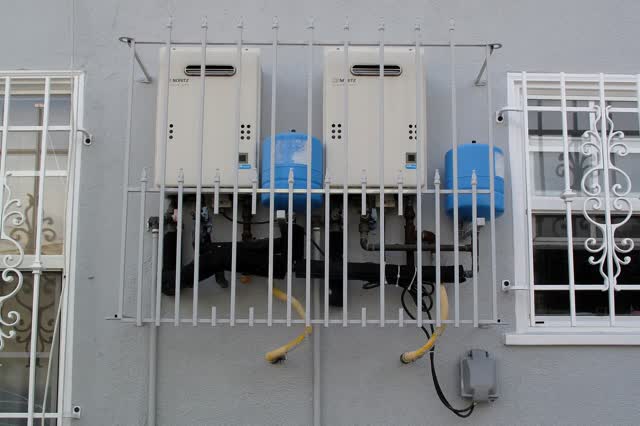
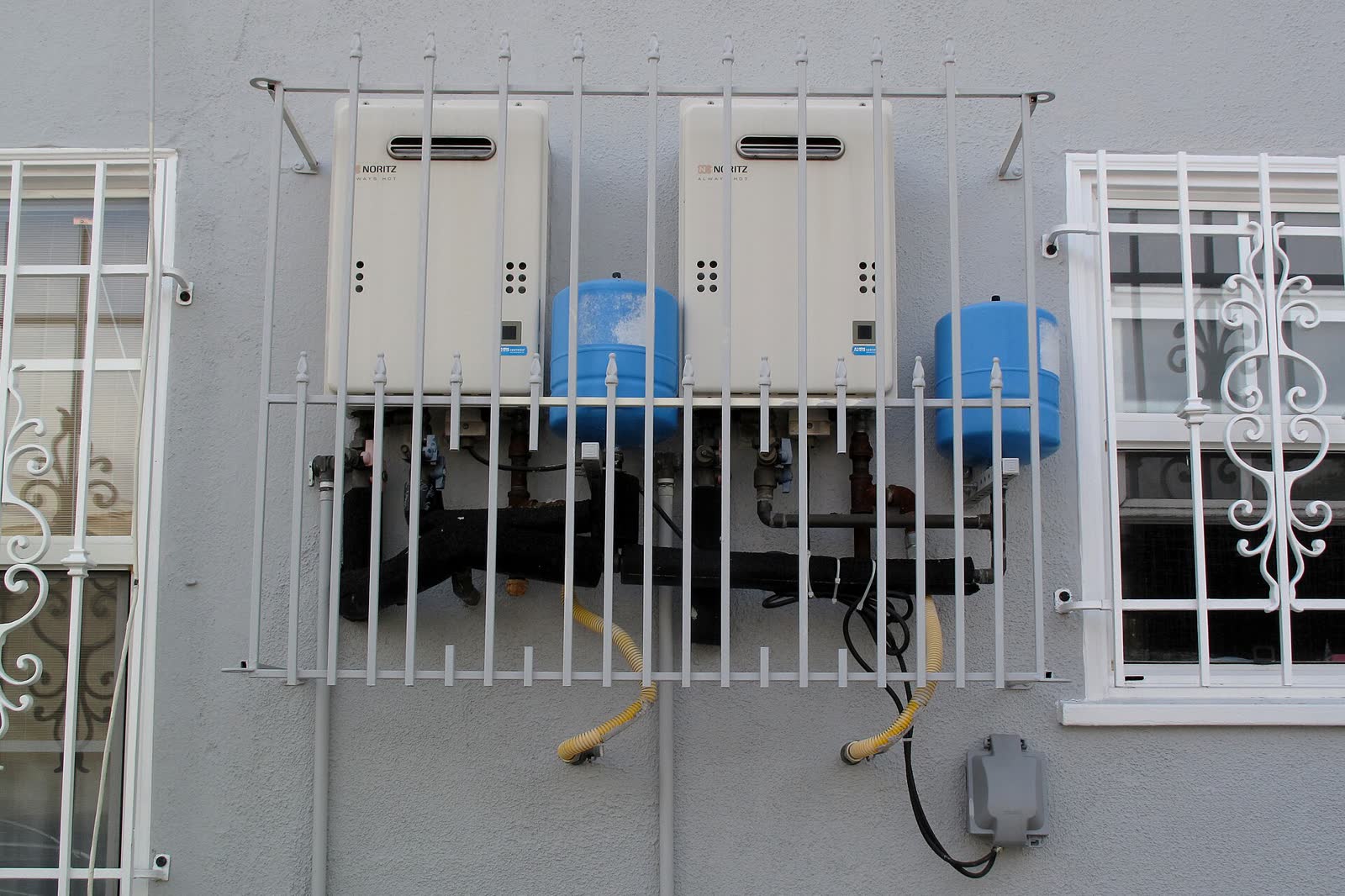
OnCall Tech is a reference tool for trained technicians and can make mistakes. Always disconnect power and confirm with the manufacturer's documentation before you work. © 2026 OnCall Tech. Original content; not a reproduction of any manufacturer document.Generic part photos (not of this brand): Two wall-mounted tankless water heaters with expansion tanks on an exterior wall by Downtowngal, CC BY-SA 4.0