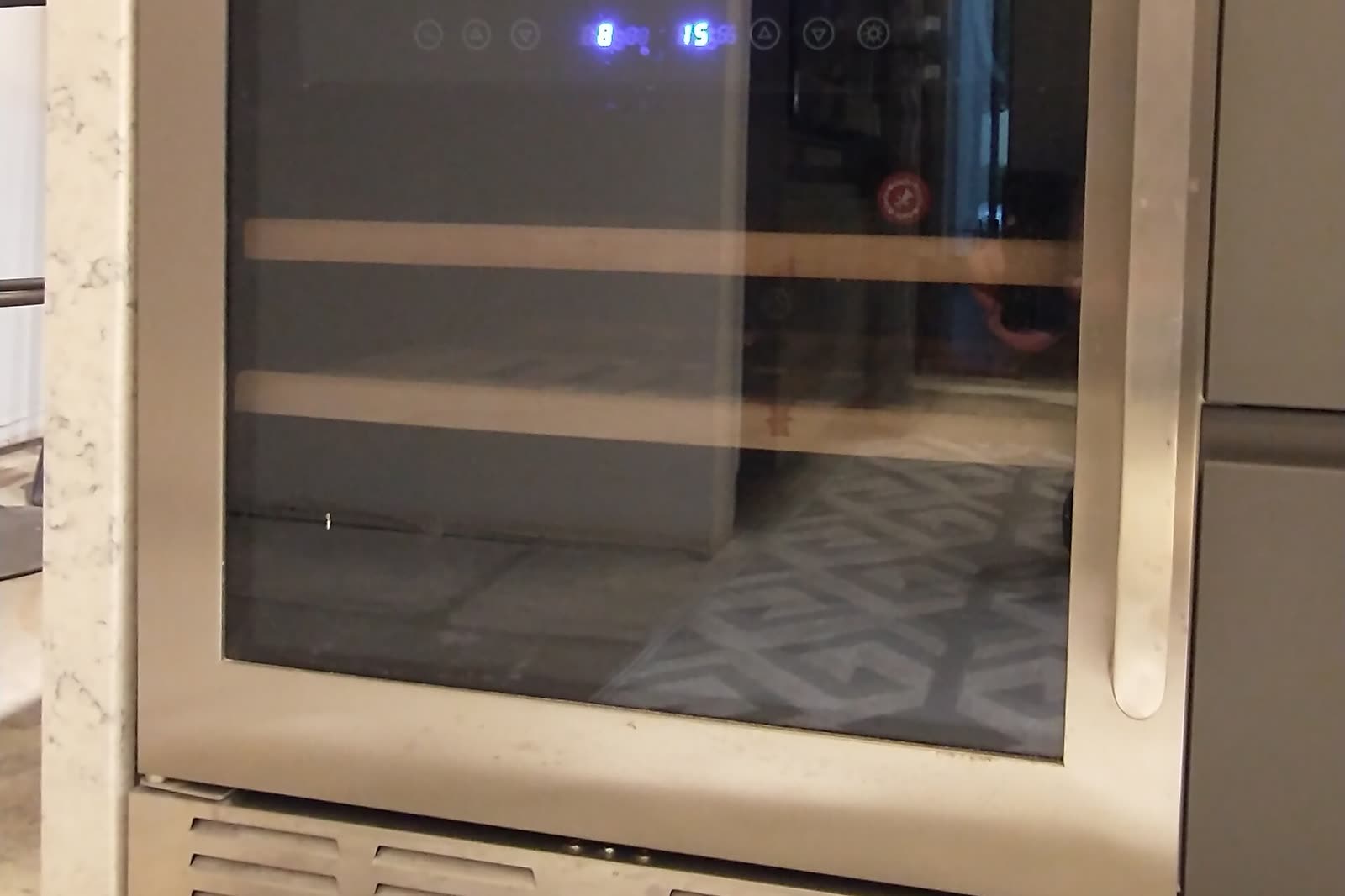
Wine cooler or beverage center runs constantly or cycles on and off often: load and environment first, then airflow, seal, fan and sealed system

Long run time is usually load or environment: a warm room, a freshly loaded cabinet, frequent door openings, a door or gasket that does not seal, or a blocked or dirty condenser. Vinotemp's chart adds an iced evaporator, low voltage and a failed condenser fan, and lists refrigerant leakage as the last cause. Short cycling points to voltage, restricted airflow, a dirty condenser or a condenser fan problem. Measure first; a cabinet holding setpoint with long run time is not necessarily a fault.

Cross-checked ~45 min moderateBrands: All

Before you start

  • Unplug before cleaning the condenser or touching the fan.
  • Refrigerant leak or sealed-system restriction: diagnosis only. Refer to an EPA 608 certified technician; many small units are not economical to recharge.
  • Built-in units: pull out carefully after removing bottles; protect the floor.

Diagnostic steps

Unlock all 6 steps with expected values

Full library + AI assistant + the OnCall Tech app for iPhone & Android. $34.90, one time.

Get lifetime access

OnCall Tech is a reference tool for trained technicians and can make mistakes. Always disconnect power and confirm with the manufacturer's documentation before you work.
More wine & beverage coolers guides

Guide · Wine Cooler

Wine cooler or beverage center won't turn on (dead display, no lights, no fan)

Start with the supply: tripped GFCI or breaker, a switched outlet, an extension cord or power strip, or a loose plug behind an undercounter unit. Then check that the unit's own controls are switched on. Only then move to the cord, an internal fuse, the power supply on the control board, and the board itself. An outlet can be protected by a GFCI located elsewhere on the circuit, so check other GFCIs nearby.

6 steps ~30 mineasy
Guide · Wine Cooler

Wine cooler or beverage center: frost or ice on the back wall

A light film that comes and goes can be normal on cold-wall units. Thick or growing ice means warm, humid air is getting in (gasket, door not closing, frequent openings), the setpoint is too cold, the unit is in a hot or poorly vented spot, or the defrost function has failed on auto-defrost models.

7 steps ~60 minmoderate
Guide · Wine Cooler

Wine cooler storage conditions: what temperature, humidity, light and vibration customers should expect (and what is not a fault)

Wine storage sources agree on the shape of the target even if the numbers differ: cool and steady (around 55 F; ranges quoted are 50-59 F and 55-60 F), moderate humidity so corks do not dry (55-65 % in one source, about 70 % in another), dark, little vibration, cork-sealed bottles on their side. A wine cooler is meant to run warmer than a refrigerator; household fridges run colder and drier than wine likes. Big swings matter more than a few degrees of offset.

4 steps ~20 mineasy
Wine cooler or beverage center runs constantly or cycles on and off often: load and environment first, then airflow, seal, fan and sealed system · OnCall Tech