 10 components covered
Field manual · Water Softener
APEC Essence (ROES) and iSpring RCC7 under-sink RO systems: quick sheet
Covers: APEC Essence ROES-50 / ROES-100 (5-stage), ROES-PH75 (6-stage with calcite), RO-PERM (permeate pump) and RO-PUMP (booster); iSpring RCC7 (5-stage), RCC7AK (6-stage alkaline remineralization) and RCC7P (booster pump). Standard under-sink layout with 10 in cartridges, a TFC membrane, a pressurized storage tank and a counter-top faucet.
Both brands use the same basic layout: one sediment and two carbon pre-filters, a thin-film composite (TFC) membrane, a pressurized tank, and a final carbon polish filter, with an optional sixth stage that adds calcium carbonate to raise pH. Performance rides on feed pressure and pre-filter condition; most low-output and taste complaints trace to a low pre-charge, clogged pre-filters, low feed pressure or an aging membrane rather than a broken part.
Safety first
- Close the feed valve and relieve pressure before opening any housing
- Booster-pump models: unplug the transformer before working on the pump
- Sanitizer water is not drinkable: flush completely before use and before reinstalling the membrane
- Chlorine damages TFC membranes: never run bleach through an installed membrane unless the manual allows it
How it works
Feed water passes stage 1 (sediment, typically 5 micron) and stages 2-3 (carbon) to remove particles and chlorine. Chlorine destroys TFC membranes, so the carbon stages protect the membrane as much as they treat the water.
Stage 4 is the membrane. Pressure pushes water through it; dissolved solids stay behind and leave through the drain line. A flow restrictor on the drain line holds back-pressure on the membrane so it can make water; without it the system just runs to drain. Output falls sharply at lower feed pressure (APEC rates the ROES-50 at 50 GPD at 60 psi but about 30 GPD at 50 psi).
Product water passes a check valve and fills the bladder tank. As the tank fills, its pressure rises; the automatic shut-off (ASO) valve, the four-port valve, closes the feed when tank pressure reaches roughly two thirds of line pressure (iSpring cites about 65%). The check valve keeps tank water from pushing back through the membrane.
When the faucet opens, tank air pressure pushes water through the final carbon polish (stage 5) and, on alkaline models, a calcite/mineral stage (stage 6) that raises pH and adds some hardness back for taste.
Low-pressure homes use a booster pump (APEC RO-PUMP, iSpring RCC7P) or a permeate pump (APEC RO-PERM) that uses drain-water energy to fill the tank against lower back-pressure and cuts waste. Permeate-pump systems are more prone to TDS creep because they react to small pressure swings.
Components & tests
Unlock all 10 components, specs, service mode and teardown
Full library + AI assistant for $34.90, one time.
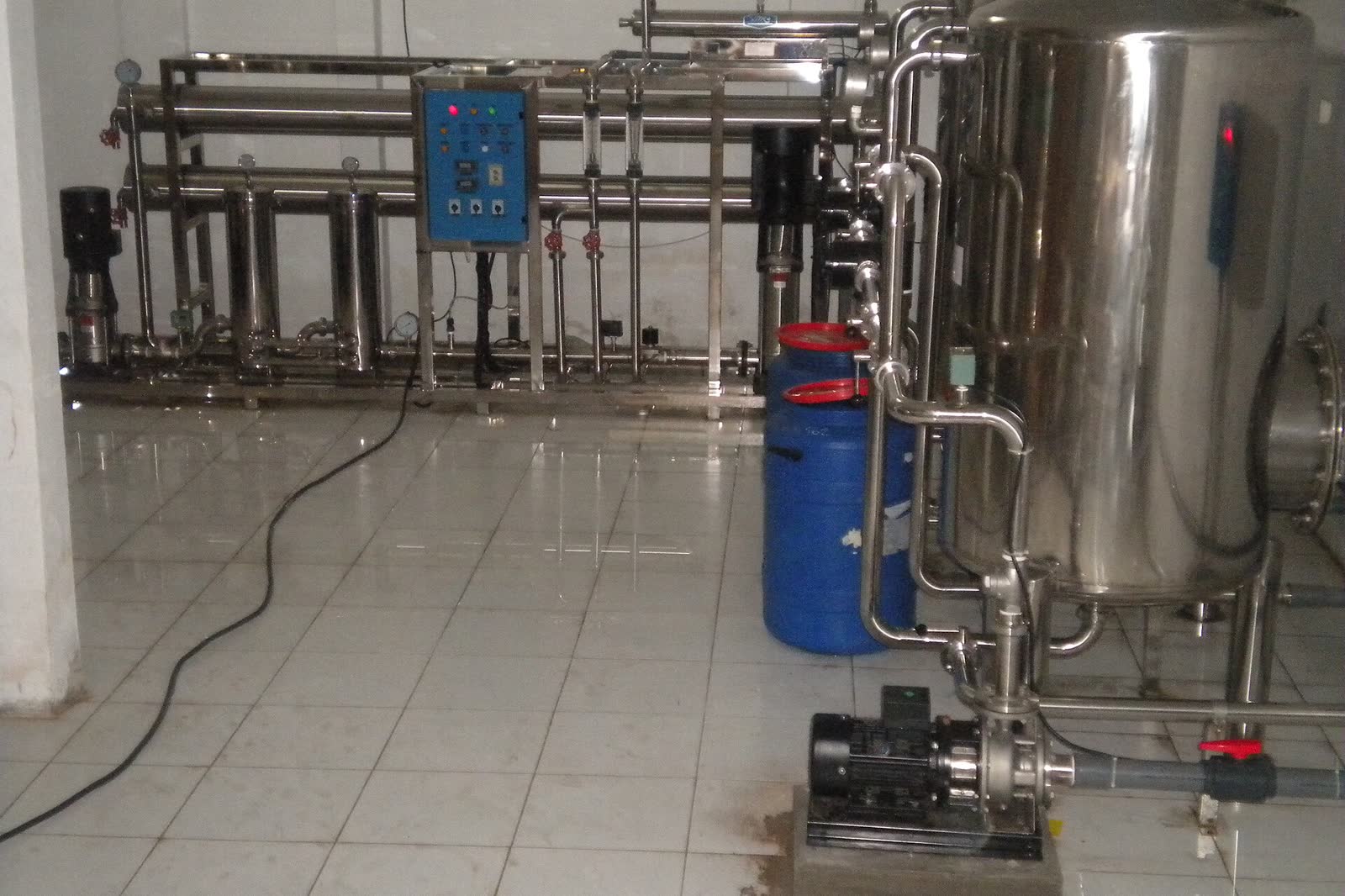
Get lifetime accessOnCall Tech is a reference tool for trained technicians and can make mistakes. Always disconnect power and confirm with the manufacturer's documentation before you work. © 2026 OnCall Tech. Original content; not a reproduction of any manufacturer document.Generic part photos (not of this brand): Reverse osmosis water treatment system with stainless tanks and pumps by Mas mufti, CC BY-SA 3.0