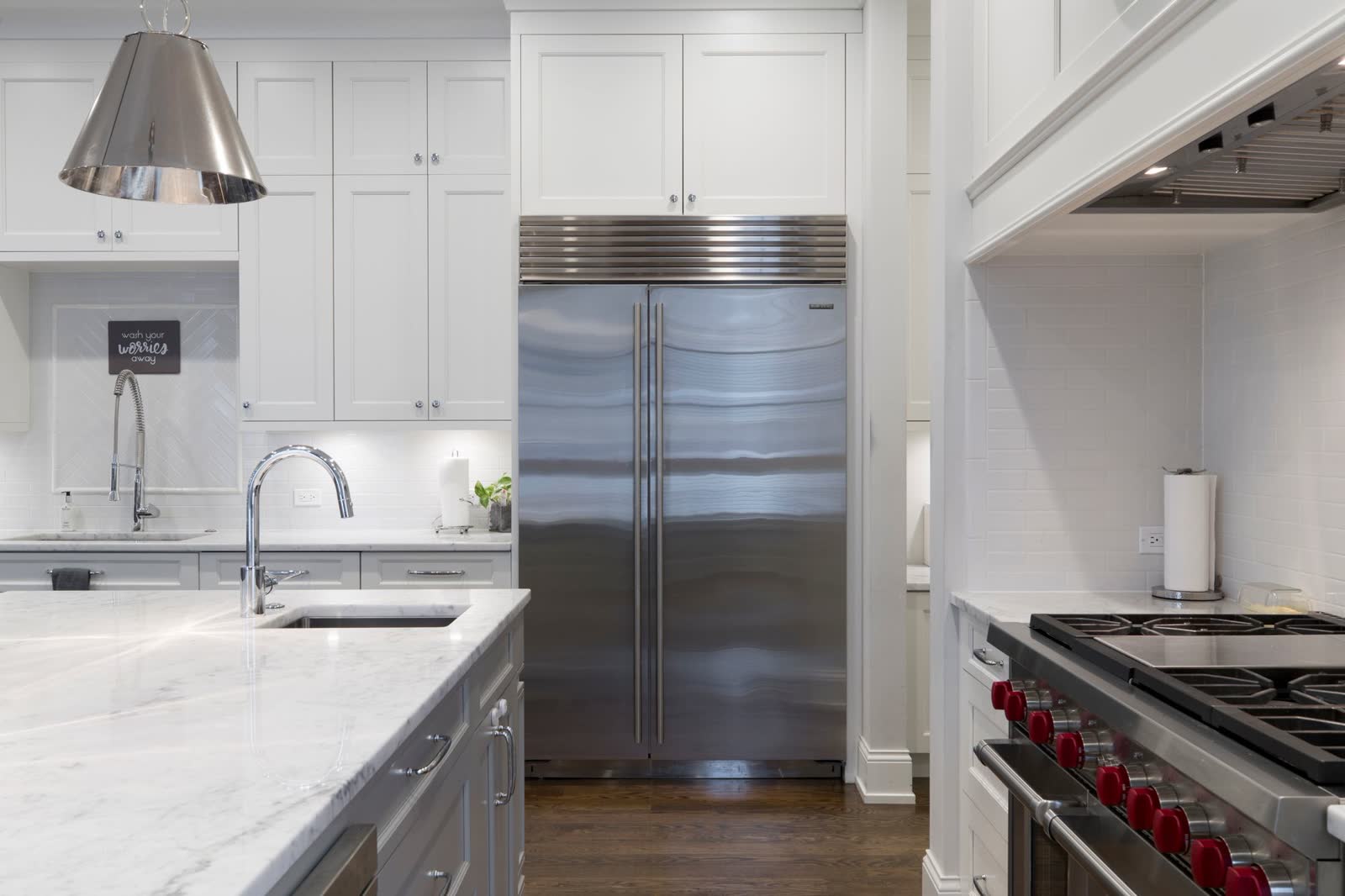
Microwave drawer install under a counter or wall oven: cutout, support floor, anti-tip block and outlet

A microwave drawer slides into a cabinet opening and sits on a solid floor. The three things that cause callbacks are: an opening cut to the wrong size for the mounting style (standard vs flush mount use different cutouts), a floor that is not solid and level, and a missing anti-tip block above the unit so the drawer tips forward when opened loaded. The outlet goes in the area the install sheet marks and must stay reachable by the supplied cord without tension. Always cut from the model's own installation manual or template; spec-sheet numbers are for planning only.

Single source ~120 min moderateBrands: Sharp, All

Before you start

  • The unit is heavy (the 24 in Sharp model weighs about 74 lb); use two people to set it
  • Kill the circuit before adding or moving an outlet; new circuits or outlets are electrician work where the law requires it
  • Never run the drawer without the anti-tip block installed

Diagnostic steps

Unlock all 6 steps with expected values

Full library + AI assistant + the OnCall Tech app for iPhone & Android. $34.90, one time.

Get lifetime access

OnCall Tech is a reference tool for trained technicians and can make mistakes. Always disconnect power and confirm with the manufacturer's documentation before you work.
More microwaves guides

Guide · Microwave

Microwave interior paint peeling, chipped or rusted (when to stop using it)

The cavity coating protects the steel; once bare metal is exposed it can rust and act as an arcing point, and flaking paint can fall into food. Small, isolated chips on an otherwise sound cavity can sometimes be touched up with a coating made for microwave cavities, fully cured before use. Widespread peeling, rust that has pitted or holed the metal, or any damage to the door, choke or seal area means the oven should be retired. Never use ordinary paint.

6 steps ~30 mineasy
Guide · Microwave

Over-the-range microwave duct run: size, equivalent length and when to recirculate instead

OTR microwave blowers are small, so the duct decides how well they vent. The common target on manufacturer install sheets is a 3-1/4 x 10 in rectangular duct or a round duct of at least 6 in through a rectangular-to-round transition, with the whole run kept under the maker's equivalent-length limit (GE sheets seen: 120 or 140 equivalent feet depending on the document). Every fitting counts as extra feet. This guide shows how to add up a run before you cut holes, and when the honest answer is to leave the unit on recirculate with a charcoal filter.

6 steps ~30 minmoderate
Guide · Microwave

Microwave door, interlock and leakage: what the federal standard requires and what to check after a door or switch repair

US microwave ovens are built to the FDA performance standard (21 CFR 1030.10): leakage may not exceed 1 mW/cm² as sold and 5 mW/cm² for the life of the oven, measured about 5 cm (2 in) from the surface, and every oven must have two independent interlocks plus a monitoring system that stops the oven if the interlocks fail. In the field that means a damaged door, hinge or seal is a stop-use condition, every interlock part goes back exactly as designed, and a door or switch repair should end with a leakage survey using a microwave survey meter. This guide covers the checks; it does not cover high-voltage work beyond the standard discharge warning.

5 steps ~30 minadvanced
Microwave drawer install under a counter or wall oven: cutout, support floor, anti-tip block and outlet · OnCall Tech