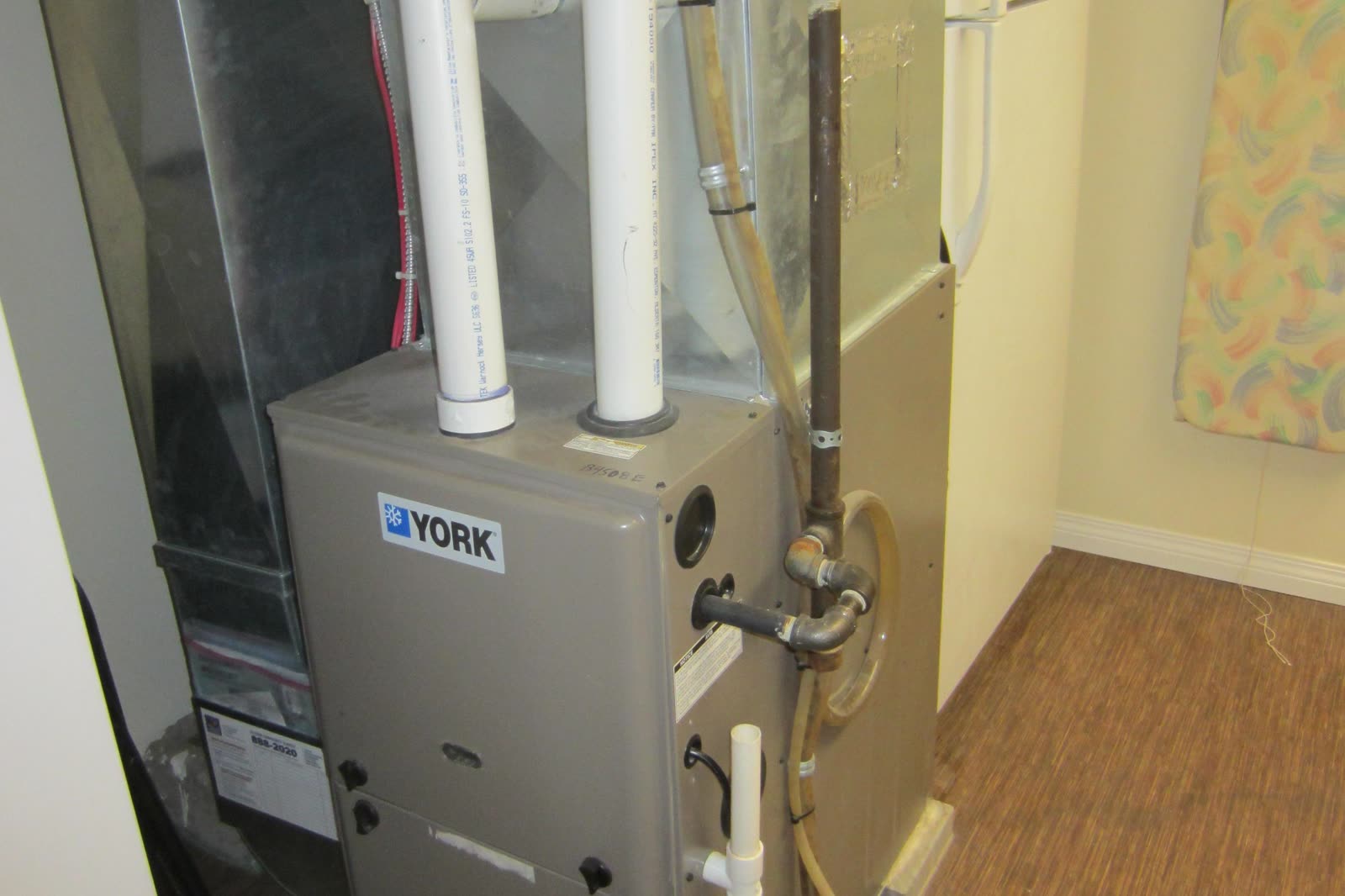
Gas furnace fall inspection: what a handyman or appliance tech checks, and what goes to a licensed gas tech

Manufacturers and ENERGY STAR call for one professional heating check-up a year, ideally in early fall before the rush. The non-gas part of that visit (filter, airflow, condensate, venting condition, thermostat, blower and wiring, a supervised first fire) can be done and documented by a general tech. Anything that touches the gas valve, gas pressure, burner adjustment, combustion analysis or the heat exchanger belongs to a licensed gas/HVAC technician. This guide is inspection-only.

Cross-checked ~45 min moderateBrands: All

Before you start

  • If you smell gas: do not touch switches, phones or the thermostat inside; get everyone out and call the gas utility or 911 from outside
  • Never adjust the gas valve, manifold pressure, burners or orifices, and never open or work on gas piping; that is licensed gas-tech work
  • Do not run a furnace that has been under water; it must be inspected and the gas controls replaced by a qualified technician
  • Kill power at the furnace switch before opening the blower compartment; the door switch alone is not a lockout

Diagnostic steps

Unlock all 7 steps with expected values

Full library + AI assistant + the OnCall Tech app for iPhone & Android. $34.90, one time.

Get lifetime access

OnCall Tech is a reference tool for trained technicians and can make mistakes. Always disconnect power and confirm with the manufacturer's documentation before you work.
More furnaces guides

Guide · Furnace

Furnace control boards: last-fault memory, fault recall and power-cycle rules (Carrier/Bryant, ICP, Goodman/Amana, Rheem/Ruud, Trane, Lennox)

Furnace boards show the current state on an LED or a 7-segment display, and many also keep a fault history. Some keep it only until power is removed; one Carrier-family description says stored codes clear on power loss or about 48 hours after the fault. Others have a fault-recall push button or recall terminal that replays recent faults. Read the LED through the door sight glass first; removing the blower door usually opens the door switch and drops power to the board.

7 steps ~15 mineasy
Guide · Furnace

Electric furnace or air handler with heat strips: fall pre-season check

Electric resistance heat has no burner or flue, so the fall check is about airflow, connections and proving every heat stage turns on. Measure supply voltage and the current of each element stage against the rating plate, look for heat-damaged wiring at the element terminals and sequencers or relays, and confirm the limits and blower work. Values come from the unit's rating plate and wiring diagram, not from this guide.

6 steps ~45 minadvanced
Guide · Furnace

Reading furnace LED flash codes by brand family (Carrier, Goodman, ICP, Rheem)

The flash code narrows the fault to one circuit before you open anything. Read it with power on, identify the board family, then use the door label to confirm. Only codes that two independent sources agree on are listed here.

8 steps ~10 mineasy
Gas furnace fall inspection: what a handyman or appliance tech checks, and what goes to a licensed gas tech · OnCall Tech