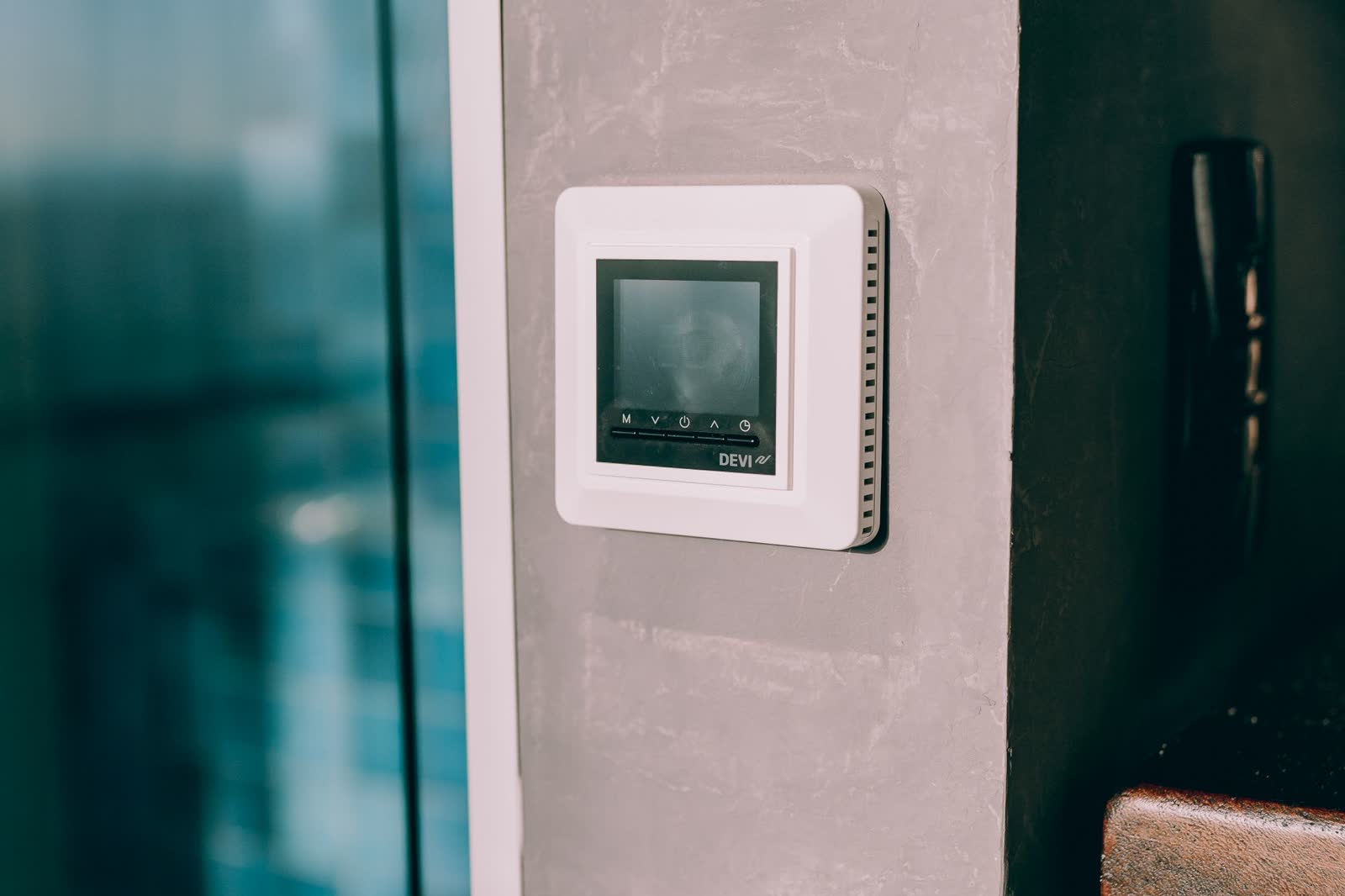
Installing wireless room sensors for a smart thermostat (ecobee, Honeywell Home/Resideo T-series): placement and pairing

Wireless room sensors let the thermostat average temperatures or favor occupied rooms. The install is placement plus pairing: mount each sensor on an interior wall at about thermostat height (Resideo says about 5 ft), away from direct sun, supply vents, doors and furniture, within the radio range the maker lists, then pair it in the thermostat or app and set which sensors count for each schedule period. Sensors do not fix an airflow problem; if a room runs far off, check ducts and registers too.

Single source ~30 min easyBrands: ecobee, Honeywell Home, Resideo

Before you start

  • Battery-powered sensors: no line-voltage work; keep coin cells away from children (swallowing hazard)

Diagnostic steps

Unlock all 5 steps with expected values

Full library + AI assistant + the OnCall Tech app for iPhone & Android. $34.90, one time.

Get lifetime access

OnCall Tech is a reference tool for trained technicians and can make mistakes. Always disconnect power and confirm with the manufacturer's documentation before you work.
More thermostats guides

Guide · Thermostat

Thermostats: alerts and wiring codes vs real equipment faults (Nest, ecobee, Honeywell, communicating systems)

Smart-thermostat alerts are inferred from temperature and runtime trends, not read from the equipment. Google says its System Health Monitor is not a substitute for an HVAC diagnosis. Some thermostat codes are about the thermostat's own power and wiring: Nest E and N codes in one family mean it lost power it was drawing through a call wire, often fixed with a C wire. The equipment fault itself is on the furnace board LED, the outdoor unit or, on communicating systems, in the wall control's service menu.

7 steps ~20 mineasy
Guide · Thermostat

Thermostat cycle rate (CPH) settings: matching the setting to the heating and cooling equipment

Many Honeywell/Resideo and similar digital thermostats use a cycle-rate setting (cycles per hour, CPH) instead of an adjustable heat anticipator. The number tells the thermostat how often it is allowed to cycle the equipment at about a 50% load. A setting meant for an electric furnace on a steam boiler gives short, inefficient firing; a steam setting on a forced-air furnace gives big temperature swings. Check the system type, then set heat, auxiliary/emergency and compressor cycle rates to match the equipment. This is a settings job: no wiring changes and no gas work.

5 steps ~15 mineasy
Guide · Thermostat

R, Rh and Rc: when to keep the jumper and when a system has two transformers

Most forced-air systems have one 24 V transformer at the furnace or air handler, and R and Rc are tied together (a factory jumper or an internal link in the thermostat). Some homes, usually a boiler or older furnace for heat plus a separate air handler or add-on AC, have two transformers: one for heat on Rh/R and one for cooling on Rc. Joining two transformers through the thermostat can blow fuses or burn transformers. Decide which you have before landing wires, and pick a thermostat that supports separate Rh and Rc when there are two.

5 steps ~30 minmoderate
Installing wireless room sensors for a smart thermostat (ecobee, Honeywell Home/Resideo T-series): placement and pairing · OnCall Tech